


 English
If you are looking for a window covering that combines thermal insulation, light control, privacy, and a clean modern appearance, cellular shades are an option worth considering. But what are cellular shades made of? Unlike traditional blinds made from rigid slats, cellular shades are primarily made from specially engineered textile materials that are folded and bonded into a hollow honeycomb structure.
The fabric is the core component of the shade. Depending on the product design, Honeycomb Blinds Fabric can be made from spunlace Non-Woven Fabric, polyester fiber, or specially engineered composite materials. The fabric is then processed into interconnected honeycomb cells that create air pockets inside the shade.
This unique combination of material and structure gives cellular shades their characteristic appearance and helps them provide thermal insulation, light control, privacy, and other practical benefits.
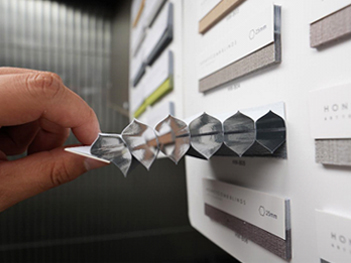
What Materials Are Cellular Shades Made Of?
The main material of a cellular shade is its fabric. Different manufacturers may use different material compositions depending on the required performance, appearance, and production process.
Common materials used for Cellular Shade Fabric include:
Spunlace non-Woven Fabric
Polyester fiber
Polyester-based non-woven materials
Composite fabrics with functional layers
Blackout fabrics with an aluminum foil or other light-blocking layer
Among these materials, spunlace non-woven fabric and polyester-based materials are widely suitable for cellular shade production because they can provide good dimensional stability, wear resistance, and pleat retention.
Why Is Spunlace Non-Woven Fabric Used for Cellular Shades?
Spunlace non-woven fabric is one of the materials used in the production of Cellular blinds fabric. It is made by entangling fibers with high-pressure water jets to form a stable non-woven fabric structure.
For cellular shade applications, the uniformity and stability of the fabric are particularly important because the material needs to maintain consistent pleats and cell dimensions after processing.
High-quality spunlace fabric should have relatively even fiber distribution and a clean surface. Poor-quality material may show visible uneven areas, cloud-like marks, impurities, or inconsistent thickness when viewed under light.
These characteristics can eventually affect the appearance and consistency of the finished cellular shade.
How Does Fabric Become a Cellular Shade?
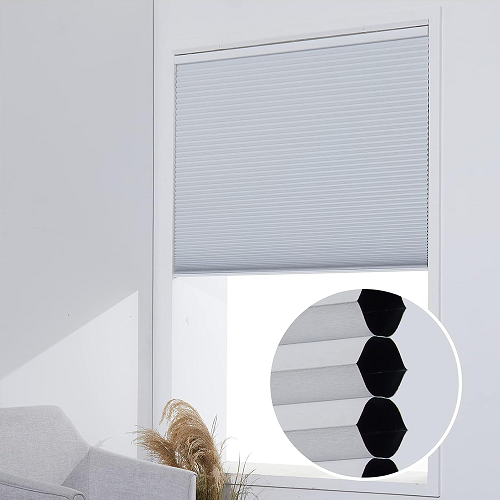
The flat fabric used for cellular shades does not remain flat in the finished product. It is processed into a repeating pleated structure and bonded at specific points to form hollow cells.
When the shade is extended, the folded fabric creates a series of interconnected air chambers. From the side, these chambers resemble a honeycomb, which is why cellular shades are also commonly known as honeycomb shades.
The hollow structure is one of the most important characteristics of the product. Instead of simply placing a flat layer of fabric between the window and the room, the cellular construction creates an additional air barrier.
How Does the Honeycomb Structure Improve Insulation?
The air trapped inside the honeycomb cells acts as a natural insulating barrier. It helps slow down the transfer of heat between the interior and exterior of the window.
In summer, cellular shades can help reduce the amount of solar heat entering the room when appropriate fabric and light-control constructions are used. In winter, the cellular structure can help reduce heat loss through the window area.
This is one of the main reasons Honeycomb blinds are commonly used in residential and commercial window applications where energy efficiency and indoor comfort are important.
However, the actual thermal performance depends on the complete product construction. Cell size, cell depth, fabric material, number of layers, coating, window configuration, and installation quality can all influence the final result.
Are Cellular Shades Made With Blackout Fabric?
Cellular shades can be manufactured with different levels of light control. Some fabrics are designed to filter strong sunlight and provide soft, diffused natural light, while others are designed for room darkening or blackout applications.
For blackout cellular shades, the fabric may incorporate an additional light-blocking layer. For example, some constructions use an aluminum foil layer combined with the base fabric to significantly reduce light transmission.
The bonding quality between these layers is extremely important. A high-quality composite fabric should maintain strong adhesion between the layers during normal use and under exposure to elevated temperatures.
Poor bonding may result in problems such as delamination, bubbling, or separation after prolonged exposure to heat and sunlight.
What Makes High-Quality Cellular Shade Fabric?
Knowing what are cellular shades made of is only the first step. The material itself does not automatically determine the quality of the finished product.
For manufacturers, distributors, and buyers, the quality of Honeycomb blinds fabric should be evaluated from several important aspects.
1. Pleat Memory and Consistency
Cellular shades need to maintain consistent folds during repeated operation. High-quality fabric should have good pleat memory, allowing the folds to remain sharp, regular, and evenly spaced after repeated expansion and compression.
This characteristic is closely related to the fabric formulation and heat-setting process used during manufacturing.
If the material has poor shape retention, the pleats may gradually become soft or uneven, which can affect both appearance and the operation of the finished shade.
2. Uniform Fabric Structure
Material uniformity is another important quality indicator. High-quality non-woven fabric should have relatively consistent fiber distribution and thickness across the entire roll.
Uneven material can become more noticeable after the fabric is folded into cells, especially when light passes through the shade.
For large-scale production, consistent fabric structure also helps manufacturers maintain a uniform appearance between different batches.
3. Strong Composite Layer Bonding
If the cellular fabric uses multiple layers, the bonding strength between those layers becomes particularly important.
For example, blackout Cellular blinds fabric may contain a light-blocking aluminum layer. The aluminum layer and textile substrate should be firmly bonded to prevent peeling, bubbling, or separation during long-term use.
This is especially important for windows exposed to strong sunlight and elevated temperatures.
4. Color Fastness and UV Resistance
Cellular shades are frequently installed in locations that receive direct or indirect sunlight. Therefore, the fabric needs to maintain its appearance after prolonged exposure to UV radiation.
Good color fastness helps reduce visible fading over time. For projects with strict quality requirements, buyers should request the relevant test results or performance standards from the fabric supplier.
UV-resistant treatments can also help improve the long-term durability of the fabric in sun-exposed applications.
5. Clean and Straight Edges
The quality of the fabric edges is another detail that should not be overlooked.
High-quality fabric should have clean, straight edges with minimal fraying, loose fibers, or pulling. This becomes particularly important when manufacturing large cellular shades, where poor edge stability can result in visible deformation or curling.
Good stiffness and dimensional stability can help the finished shade maintain a neat appearance across its entire width.
Can Cellular Shades Help Reduce Outside Noise?
The hollow honeycomb structure can also provide some acoustic benefits. The air chambers and textile structure can help absorb or reduce part of the incoming sound energy.
However, cellular shades should not be considered a complete soundproofing solution. Their acoustic performance depends on fabric construction, cell structure, window configuration, installation, and the type and frequency of outside noise.
For homes located near roads, offices, bedrooms, or other spaces where reducing everyday outdoor noise is desirable, cellular shades can provide an additional layer of comfort.
What Are Cellular Shades Made Of Besides Fabric?
Although fabric is the main functional component, a complete cellular shade also includes several hardware components.
Headrail
The headrail is installed at the top of the shade and supports the fabric and operating mechanism. Its material may vary depending on the shade system.
Bottom Rail
The bottom rail adds weight and stability to the lower part of the shade. It helps the cellular fabric extend evenly and maintain a neat appearance.
Operating System
Depending on the product design, cellular shades can use cordless systems, cord systems, chain mechanisms, spring-assisted systems, or motorized operation.
Some cellular shade systems can also be designed for specialized operating configurations such as top-down/bottom-up operation.
Why Are Cellular Shades Suitable for Top-Down/Bottom-Up and Day-Night Systems?
One advantage of cellular fabric is its flexibility in different shade configurations.
For example, top-down/bottom-up cellular shades allow users to lower the upper portion while keeping the lower portion closed. This can provide natural daylight from the upper part of the window while maintaining privacy at eye level.
Cellular fabrics can also be combined in day-night systems, where two different fabric constructions are used in the same shade. One fabric may provide stronger light filtering or blackout performance, while another allows more natural daylight into the room.
These configurations make cellular blinds for windows suitable for bedrooms, living rooms, offices, hotels, and other spaces where flexible light and privacy control is required.
What Should You Check When Buying Cellular Blinds Fabric?
If you are purchasing Cellular blinds fabric for manufacturing or wholesale projects, it is important to evaluate more than the appearance of a sample.
Material composition: Confirm whether the fabric uses spunlace non-woven material, polyester, or a composite construction.
Cell size: Check the nominal cell dimension and production tolerance.
Cell depth: Different cell depths can create different visual and thermal characteristics.
Fabric weight: Confirm the weight per square meter for consistent production.
Fabric thickness: Check whether the thickness matches the intended shade system.
Light transmission: Determine whether the fabric is light filtering, room darkening, or blackout.
Color fastness: Consider performance under prolonged sunlight exposure.
UV resistance: Important for windows exposed to strong sunlight.
Pleat consistency: Check whether the fabric maintains even folds after repeated operation.
Edge quality: Inspect for fraying, loose fibers, curling, or deformation.
Layer bonding: For composite or blackout fabrics, check the adhesion between different layers.
Customization: Confirm available colors, dimensions, structures, and other production options.
How to Choose the Right Cellular Shade Material?
The best material depends on the application rather than a single universal standard.
For living rooms and offices, light-filtering fabric can provide a balance between privacy and natural daylight. For bedrooms and media rooms, blackout cellular fabric may be more appropriate when stronger light control is required.
For areas with strong sunlight, UV resistance and color fastness should receive greater attention. For large windows, fabric stability, pleat consistency, edge quality, and dimensional stability become increasingly important.
If thermal performance is a priority, buyers should evaluate the complete honeycomb structure rather than looking only at the fabric material. Cell size, cell depth, single-cell or double-cell construction, and installation can all influence the final performance.
FAQ
What are cellular shades made of?
Cellular shades are mainly made from specially engineered fabrics, commonly including spunlace non-woven fabric and polyester-based materials. Depending on the application, additional layers such as blackout or aluminum foil layers may also be incorporated into the fabric.
Are cellular shades made of polyester?
Many cellular shades use polyester-based materials because polyester can provide good durability, shape retention, and dimensional stability. However, the exact material composition varies between manufacturers and product constructions.
What is Honeycomb blinds fabric made of?
Honeycomb blinds fabric can be made from spunlace non-woven fabric, polyester fibers, or composite materials. The fabric is processed into a pleated honeycomb structure to create the air chambers characteristic of cellular shades.
Are cellular shades good for insulation?
Cellular shades can provide useful thermal insulation because their hollow cells trap air between the window and interior space. However, insulation performance depends on the complete shade construction, including cell size, cell depth, fabric, layers, and installation.
Are cellular shades blackout?
Some cellular shades are designed as blackout shades, while others are light filtering. Blackout models typically use denser fabric constructions or additional light-blocking layers to reduce light transmission.
Can cellular shade fabric be customized?
Depending on the manufacturer, cellular shade fabric may be available in different cell sizes, colors, widths, materials, light-control levels, and functional treatments. Custom specifications should be confirmed according to the production process and order requirements.