

 English
When choosing honeycomb shades, the fabric is one of the most important factors to consider. The fabric affects the shade's appearance, light control, thermal insulation, privacy, durability, and overall performance. So, what fabrics are used for honeycomb shades?
Honeycomb shades are commonly made from engineered textile materials, with polyester-based Non-Woven Fabric and Woven Fabric being two important options for different shade designs and performance requirements. Depending on the application, manufacturers may also use fabrics with blackout coatings, thermal insulation treatments, flame-retardant properties, or other functional finishes.
Understanding the differences between these materials can help blind manufacturers, wholesalers, interior designers, and project buyers select the right Honeycomb Blinds Fabric for their products and projects.
What Is Honeycomb Shade Fabric?
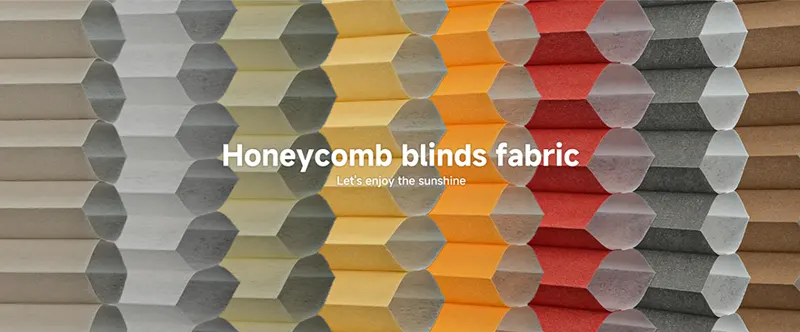
Honeycomb shade fabric is a specially designed textile used to create cellular or honeycomb window shades. Unlike conventional flat window blind fabric, it is formed into a pleated cellular structure. When assembled, the fabric creates air pockets between the front and back layers.
These cellular pockets provide an additional layer of insulation between the indoor environment and the window. As a result, cellular shade fabric can help reduce heat transfer while also providing privacy and light control.
The performance of a honeycomb shade does not depend on the fabric alone. Cell size, fabric thickness, structure, color, openness, blackout treatment, and the quality of the manufacturing process can all affect the final performance.
1. Non-Woven Fabric for Honeycomb Shades
Non-woven Honeycomb Fabric is one of the commonly used materials for cellular window shades. Instead of being constructed by traditional weaving or knitting, non-woven fabric is manufactured by bonding or mechanically processing textile fibers into a stable sheet-like material.
For honeycomb shades, non-woven materials can provide a consistent surface and are suitable for pleating and forming cellular structures. They can also be engineered for different levels of light control, insulation, and privacy.
Advantages of Non-Woven Honeycomb Fabric
Suitable for pleated cellular shade structures
Consistent and uniform surface appearance
Available in different thicknesses and weights
Can be produced in various colors
Can be designed for light filtering or blackout applications
Suitable for thermal insulation applications
Can support customized sizes and specifications
Because of these characteristics, non-woven fabric is suitable for residential window shades, bedrooms, living rooms, offices, hotels, and other interior applications.
2. Woven Fabric for Honeycomb Shades
Woven honeycomb fabric is another option for cellular shade manufacturing. Woven fabric is produced by interlacing yarns in a controlled pattern, which creates a textile structure with specific strength, texture, and appearance.
Compared with non-woven materials, woven fabric can provide a different surface texture and visual effect. This makes it useful when the appearance of the finished shade is an important part of the interior design.
Advantages of Woven Honeycomb Fabric
Distinctive textile texture
Good dimensional stability when properly engineered
Available in different yarn constructions
Suitable for customized colors and designs
Can be engineered for different light-control requirements
Suitable for residential and commercial interior applications
For projects where both functional performance and decorative appearance are important, woven fabric can be considered as an alternative to conventional non-woven cellular shade materials.
3. Blackout Fabric for Honeycomb Shades
Blackout honeycomb fabric is designed for applications where controlling external light is a priority. The fabric structure and functional treatment can significantly reduce the amount of light passing through the shade.
Blackout cellular shades are particularly suitable for bedrooms, hotels, home theaters, nurseries, and spaces where strong daylight can affect sleep, privacy, or screen visibility.
However, blackout performance should not be judged only by the fabric name. The actual result can also depend on the fabric construction, coating or treatment, cellular structure, shade installation, and side light gaps around the window.
4. Light-Filtering Fabric
Not every honeycomb shade needs complete blackout performance. For living rooms, offices, dining areas, and other spaces where natural daylight is desirable, light-filtering cellular shade fabric can be a better choice.
Light-filtering fabric allows a controlled amount of daylight to enter the room while reducing glare and maintaining a certain level of privacy. This creates a softer indoor lighting environment without completely blocking natural light.
How Does Fabric Affect Honeycomb Shade Performance?
The fabric used in a honeycomb shade plays an important role in its overall performance. However, it is important to understand that the fabric works together with the cellular structure rather than functioning independently.
| Fabric / Feature | Main Function | Typical Applications |
|---|---|---|
| Non-Woven Fabric | Pleating, insulation, light control | Residential and commercial shades |
| Woven Fabric | Texture, appearance, structural performance | Interior design and premium applications |
| Blackout Fabric | Strong light blocking and privacy | Bedrooms, hotels, media rooms |
| Light-Filtering Fabric | Soft daylight and glare reduction | Living rooms, offices, dining areas |
What Fabric Is Best for Thermal Insulation?
If thermal insulation is the primary requirement, the best choice is not necessarily determined by whether the material is woven or non-woven. The overall cellular construction is equally important.
A well-designed thermal insulation fabric combined with a properly formed cellular structure can create air pockets that reduce heat transfer through the window area. Fabric density, thickness, color, cell size, and the number of layers can all influence the final result.
For windows exposed to strong sunlight, buyers may consider fabrics designed for heat reduction, UV protection, and solar control. These features can help improve indoor comfort while reducing the impact of direct sunlight.
How to Choose the Right Fabric for Honeycomb Shades?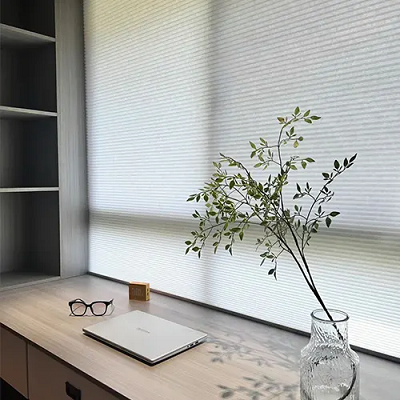
The right fabric should be selected according to the intended application rather than simply choosing the thickest or darkest material. Different spaces have different requirements.
For Bedrooms
Bedrooms usually require stronger privacy and light control. Blackout or room-darkening fabric can be considered when the room needs to remain darker during daytime or early morning.
For Living Rooms
Living rooms often benefit from light-filtering fabric. It can maintain natural daylight while reducing glare and providing privacy. Decorative woven materials may also be considered when appearance is an important factor.
For Offices
For offices and workspaces, fabric should provide effective glare control without making the room unnecessarily dark. Light-filtering or solar-control options can be suitable for areas with computer screens.
For Hotels
Hotels often require a combination of blackout performance, thermal insulation, privacy, durability, and consistent appearance. The selected fabric should also match the overall interior design and project specifications.
For Large Commercial Projects
For large-scale projects, buyers should consider more than fabric appearance. Important factors include material consistency, color consistency between batches, dimensional stability, performance requirements, available widths, packaging, production capacity, and customization options.
Does the Cell Size Matter?
Yes. The size and configuration of the cellular structure can influence the performance and appearance of the finished shade. Different cell sizes are suitable for different window sizes and design requirements.
For example, larger cellular structures can create a distinctive visual appearance, while smaller structures may be preferred for certain window proportions and shade designs. Buyers should therefore evaluate the fabric and cellular structure together instead of selecting fabric independently.
For manufacturers developing different cellular shade products, specifications such as cell size, pleat structure, fabric material, width, thickness, color, and light-control level should be considered as a complete system.
Why Custom Honeycomb Shade Fabric Matters
Different blind manufacturers and window treatment brands may have different requirements for their products. Standard fabric specifications may not always meet the needs of a specific shade system.
With custom honeycomb fabric, manufacturers can discuss requirements such as material, color, width, structure, thickness, light transmission, blackout performance, and other functional characteristics.
For B2B buyers, customization can also help maintain a consistent appearance across different product series and interior projects.
Frequently Asked Questions
1. What is the most common fabric used for honeycomb shades?
Polyester-based textile materials are widely used for cellular shades. Depending on the product design, manufacturers may use non-woven fabric, woven fabric, or specially treated materials for different performance requirements.
2. Is non-woven fabric suitable for honeycomb shades?
Yes. Non-woven fabric can be engineered for pleating and cellular shade production. It is suitable for applications requiring consistent appearance, light control, privacy, and thermal insulation.
3. Is woven fabric better than non-woven fabric?
Not necessarily. Woven and non-woven fabrics have different characteristics. The better choice depends on the shade structure, appearance, light-control requirements, thermal performance, and intended application.
4. What fabric is best for blackout honeycomb shades?
A fabric specifically engineered for blackout or strong room-darkening performance is generally preferred. The cellular construction and installation method should also be considered because light can enter through gaps around the shade.
5. Can honeycomb shade fabric be customized?
Yes. Depending on the manufacturer, customization may include material selection, fabric color, width, thickness, cellular structure, light-control level, and other specifications.
Looking for Custom Honeycomb Shade Fabric?
If you are a blind manufacturer, wholesaler, interior designer, or project buyer looking for non-woven honeycomb fabric, woven honeycomb fabric, blackout fabric, or customized cellular shade fabric, choosing a supplier with flexible material and specification capabilities can help you develop the right solution for your market. Discuss your required material, width, cell structure, color, and performance requirements with a professional honeycomb shade fabric manufacturer to find a suitable option for your application.