


 English
Cellular shades are widely used for their clean appearance, energy efficiency, privacy, and flexible light control. One specification that is often overlooked when selecting a cellular shade is the cell size. The size of each honeycomb cell can affect the visual proportion of the shade, fabric structure, insulation characteristics, and suitability for different window sizes.
Whether you are selecting Honeycomb Blinds Fabric, Cellular blinds fabric, or complete cellular shades, understanding how to measure cell size can help you choose a suitable product for different applications.
What Is Cellular Shade Cell Size?
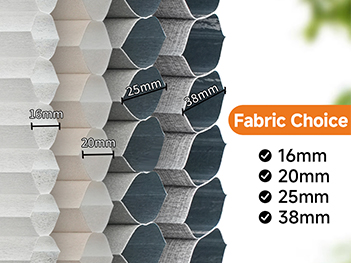
Cell size refers to the width or diameter of an individual honeycomb-shaped air pocket within the shade fabric. When viewed from the side, Cellular Shade Fabric consists of interconnected cells that create a series of air chambers.
These air chambers are an important part of the cellular shade structure. The trapped air can help reduce heat transfer between the window and the interior space, which is one reason cellular shades are commonly used for thermal management.
Depending on the manufacturer and product construction, common cell dimensions may include approximately 20mm, 25mm, 30mm, and 38mm, although available sizes can vary according to the fabric design and production requirements.
Why Is Cellular Shade Cell Size Important?
Cell size is more than a simple dimensional specification. It can influence the overall appearance and structure of a cellular shade, so it should be considered when choosing fabric for residential or commercial window coverings.
1. Thermal Insulation
The honeycomb structure creates air pockets between the window and the room. These air pockets can help slow down heat transfer and contribute to the thermal performance of the finished shade.
However, a larger cell does not automatically mean better insulation. Fabric material, cell depth, number of layers, coating, construction quality, and installation method can also have a significant impact on thermal performance.
2. Visual Appearance
Cell size changes the visual proportion of the shade. Smaller cells generally produce a finer and more compact appearance, while larger cells create a more noticeable geometric pattern.
For this reason, cell size should be selected together with the overall width and height of the window.
3. Light Control and Privacy
Cellular shades can be produced with different fabric constructions, including light-filtering and blackout options. Cell size itself does not determine whether a shade is blackout, but the cellular structure works together with the fabric and coating to provide the desired light-control performance.
4. Folded Size and Stack Height
Different cellular structures can have different folded dimensions when the shade is raised. This can be important for large windows, sliding doors, skylights, and other installations where available space above the window is limited.
How to Measure Cellular Shade Cell Size?
Measuring cell size is relatively simple when you have a sample of the fabric available. The most important point is to measure the actual cell structure rather than the folded thickness of the shade.
Step 1: Open the Cellular Shade Fabric
Place the cellular shade or Cellular blinds fabric on a flat surface and gently open the honeycomb structure. Do not pull the fabric excessively or compress the cells during measurement, as this may affect the result.
Step 2: Identify a Complete Cell
Look at the side profile of the fabric and identify the repeating honeycomb-shaped cells. Select a complete and undamaged cell that is easy to measure.
Step 3: Measure the Cell Width
Use a ruler or digital caliper to measure the width of the cell according to the manufacturer's measurement method.
For higher accuracy, a digital caliper can be useful when checking fabric samples or performing production quality inspections.
Step 4: Measure Multiple Cells
Instead of measuring only one cell, measure several consecutive cells and calculate the average. This helps reduce errors caused by fabric deformation or slight variations in the measurement position.
For example, if five cells have a combined width of approximately 125mm, the average cell size would be:
125mm ÷ 5 = 25mm
The result can then be compared with the manufacturer's nominal cell-size specification.
Step 5: Compare With the Manufacturer's Specification
The measured result may not be exactly the same as the nominal cell size because of manufacturing tolerances, fabric tension, compression, and measurement methods.
For purchasing or production purposes, always use the manufacturer's official specification as the primary reference.
How Do You Measure Cell Size on Existing Cellular Blinds?
If you already have cellular blinds for windows installed, you may be able to identify the approximate cell size without removing the entire shade.
Lower the shade or adjust it until several cells are clearly visible. Measure the total width of multiple cells and divide that number by the number of cells measured.
For example:
Number of cells measured: 8
Total measured width: 200mm
Estimated cell size: 200mm ÷ 8 = 25mm
This method is useful when you need to identify an existing shade before ordering replacement fabric or a new cellular shade with a similar structure.
Common Cellular Shade Cell Sizes
Cellular shades are available in different cell dimensions to meet different design and performance requirements. Common options may include 20mm, 25mm, 30mm, and 38mm, depending on the manufacturer and product series.
| Cell Size | Typical Characteristics | Potential Applications |
|---|---|---|
| Small Cell | Fine and compact appearance | Small and medium-sized windows |
| Medium Cell | Balanced appearance and functionality | Residential and commercial windows |
| Large Cell | More pronounced honeycomb structure | Large windows and architectural applications |
This table is intended as a general guide. The appropriate cell size depends on the actual fabric construction, window dimensions, shade system, and application requirements.
How Does Cell Size Affect Different Window Sizes?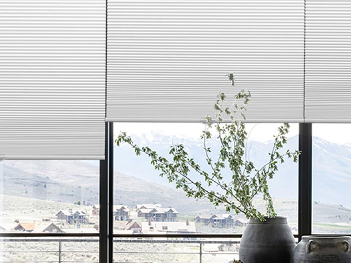
The dimensions of the window are an important consideration when selecting cellular shade cell size. A suitable proportion can help create a more balanced appearance.
Small Windows
Smaller windows may work well with a smaller cell structure. The finer pattern can create a clean appearance without making the shade look visually heavy.
Standard Residential Windows
Medium-sized cells can provide a balanced visual proportion for many standard residential windows. They can also work with a wide range of interior styles.
Large Windows and Sliding Doors
Large windows and sliding glass doors have a larger visible surface area. A larger cellular structure may therefore create a more proportional appearance. However, buyers should also consider fabric weight, operating systems, shade width, and available installation space.
Does a Larger Cell Mean Better Insulation?
Not necessarily. It is a common misconception that a larger honeycomb cell will always provide better thermal insulation.
Cell size is only one factor affecting thermal performance. Material composition, cell depth, fabric layers, air-pocket design, surface coating, and manufacturing quality can all influence how effectively the shade helps manage heat transfer.
When comparing different Honeycomb blinds, it is therefore better to evaluate the complete product specification rather than selecting a product based only on cell size.
What Tools Can Be Used to Measure Cellular Shade Cell Size?
Different tools can be used depending on the required measurement accuracy.
Ruler: Suitable for quick and basic measurements.
Measuring Tape: Useful when measuring several cells across a larger section of fabric.
Digital Caliper: Recommended when more accurate measurements are required.
Micrometer: Useful for certain material measurements, although it is generally not necessary for basic cell-size measurement.
For quality control, measuring several cells and calculating the average is generally more reliable than measuring only one cell.
What Should You Check Besides Cell Size?
If you are sourcing Honeycomb Blinds Fabric for manufacturing, wholesale, or custom window-covering projects, cell size should be evaluated together with other important specifications.
Fabric material and composition
Cell structure and depth
Fabric width
Fabric thickness
Weight per square meter
Light-filtering or blackout performance
Thermal insulation performance
UV resistance
Flame-retardant properties
Available colors and customization options
Production tolerance
These specifications are especially important when purchasing Cellular blinds fabric for large-scale production. Consistent cell dimensions and stable fabric quality can help finished shades maintain a uniform appearance across different production batches.
FAQ
What is the easiest way to measure cellular shade cell size?
Measure the total width of several complete cells and divide the result by the number of cells measured. This is generally more reliable than measuring a single cell.
Are 20mm and 25mm cellular shade cells the same?
No. They are different cell dimensions and create different fabric structures and visual proportions. Always confirm the manufacturer's nominal cell size before ordering.
Does cell size determine whether a cellular shade is blackout?
No. Blackout performance mainly depends on fabric construction, material layers, coatings, and the overall shade design. Cell size alone does not determine blackout performance.
Can cellular shade cell size be customized?
Depending on the manufacturer and production process, customized cell dimensions may be available. Buyers should confirm available sizes, minimum order quantities, production tolerances, and customization options before placing an order.