


 English
Choosing the right non-woven Honeycomb Blind Fabric requires more than selecting a color or pattern. For window covering manufacturers, wholesalers, and project buyers, fabric construction, cell structure, light control, width, functional performance, and customization capability can all affect the final product.
How to Choose the Right Non-Woven Honeycomb Blind Fabric?
The right non-woven Honeycomb Blind Fabric should match the requirements of the finished blind, window size, indoor environment, light control needs, and project specifications. Buyers should evaluate the following factors before placing a bulk order.
1. Consider the Honeycomb Cell Structure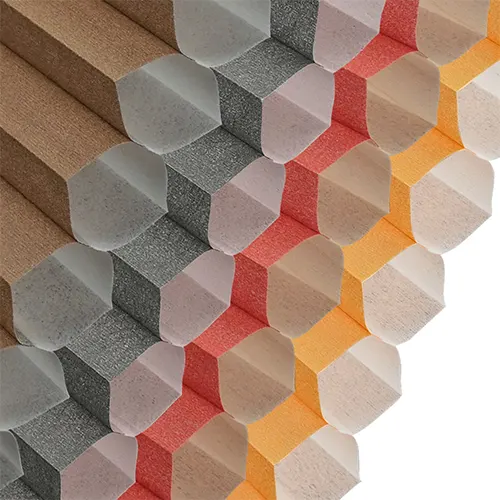
The cellular structure is one of the most important factors when selecting Honeycomb Blind Fabric. Different cell structures can create different visual effects and may be suitable for different finished blind designs.
Common structures include single-hole, hole-in-hole, and side-by-side hole configurations. The choice can depend on the desired appearance, fabric construction, and performance requirements of the finished product.
For manufacturers developing multiple product lines, having access to several cell structures can provide greater flexibility when creating different collections.
2. Select the Appropriate Cell Size
Cell size can affect the appearance and overall construction of a honeycomb blind. Larger cells can create a more noticeable cellular appearance, while smaller cells can provide a different visual proportion for the finished shade.
When selecting the cell size, buyers should consider the window dimensions, blind design, fabric structure, and target market. For large-scale production, the selected specification should also be compatible with the manufacturer's processing equipment and finished blind system.
3. Define the Required Light Control
Different rooms require different levels of daylight control. A bedroom or media room may require stronger light blocking, while an office or living space may benefit from softer daylight transmission.
Before selecting the fabric, determine whether the project requires:
Light-filtering performance
Reduced glare
More privacy
Higher light-blocking performance
A balance between natural light and privacy
The fabric construction, color, backing, and finished blind design should be considered together when determining the final light-control performance.
4. Check Thermal Insulation Requirements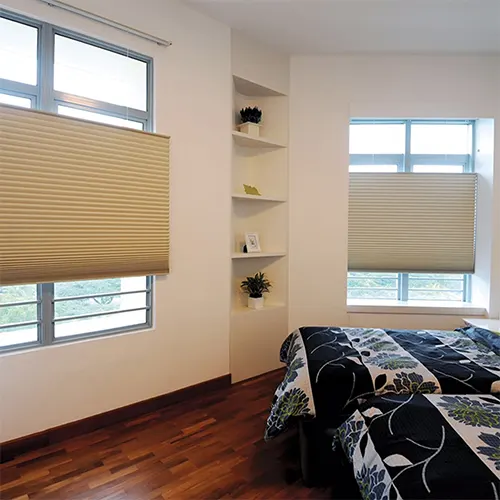
If the project focuses on indoor temperature management and energy efficiency, thermal performance should be included in the fabric selection process.
The honeycomb structure naturally creates air spaces within the blind, which can help reduce heat transfer through the window covering. However, actual performance depends on the complete window system, including glazing, installation, air gaps, and blind construction.
For projects with specific energy-efficiency targets, buyers should request relevant product data and test information from the supplier rather than relying only on general material descriptions.
5. Choose the Right Fabric Width
Fabric width is an important consideration for manufacturers producing finished honeycomb blinds. The available width should be sufficient for the intended blind dimensions while minimizing unnecessary seams or material waste.
For large windows and project orders, buyers should confirm the maximum available fabric width with the supplier at the quotation stage.
6. Consider Functional Treatments
Different environments may require additional fabric functions. For example, hotel, commercial, or special-purpose projects may have requirements beyond basic light control and appearance.
Depending on the application, buyers may consider:
Water-resistant treatment
Flame-retardant treatment
Light-filtering construction
Light-blocking construction
Other project-specific functional treatments
Functional requirements should be confirmed before production because treatments and fabric construction can affect the final appearance, hand feel, processing characteristics, and cost.
7. Match the Fabric With the Finished Blind System
Not every fabric specification is suitable for every honeycomb blind system. The fabric should be compatible with the required pleating, bonding, cutting, assembly, operating mechanism, and finished dimensions.
Manufacturers should therefore evaluate fabric samples before committing to large-volume production. Testing the fabric through the actual manufacturing process can help identify potential issues with forming, cutting, bonding, or assembly.
8. Check Color and Design Options
For residential and commercial window covering projects, appearance is still an important purchasing factor. Buyers may require a specific color palette, texture, or decorative style to match an interior design scheme.
When purchasing for a collection or private-label product line, it is useful to work with a supplier that can provide multiple colors and customized design options while maintaining consistent quality between production batches.
9. Evaluate Customization Capability
Customization is particularly important for OEM and wholesale buyers. Instead of using a single standard fabric specification, buyers may need different widths, colors, cell sizes, structures, or functional treatments.
HORNET offers customized non-woven honeycomb blind fabric solutions for different window covering requirements. Its product range includes different cellular structures and cell sizes, with options such as single-hole, hole-in-hole, side-by-side hole, and pleated constructions. OEM and ODM requirements can also be discussed according to project specifications.
For buyers developing their own honeycomb blind collections, this type of customization capability can make it easier to match fabric specifications with different product designs and target markets.
10. Consider MOQ and Production Capacity
For bulk purchasing, fabric specifications are only part of the decision. Buyers should also evaluate MOQ, production capacity, lead time, quality control, packaging, and the supplier's ability to maintain consistent specifications during repeat orders.
This is especially important for distributors and finished blind manufacturers who need to replenish the same fabric collection over time.
What Information Should You Provide to a Honeycomb Fabric Supplier?
To receive a more accurate quotation and recommendation, buyers can provide the following information:
Required fabric width
Preferred cell structure
Required cell size
Color or pattern requirements
Light-filtering or light-blocking requirements
Water-resistant or flame-retardant requirements
Finished blind dimensions
Estimated order quantity
OEM or ODM requirements
Target application or project type
The more complete the project information, the easier it is for the supplier to recommend a suitable fabric construction and prepare samples or a quotation.
Conclusion
Selecting non-woven honeycomb blind fabric should be based on the complete requirements of the finished window covering rather than a single specification. Cell structure, cell size, width, light control, thermal performance, functional treatments, appearance, and customization should all be evaluated together.
For manufacturers and wholesale buyers, choosing a supplier with flexible specifications and OEM/ODM capabilities can also support product development and long-term production requirements.
Need help selecting the right non-woven honeycomb blind fabric? Contact HORNET with your required specifications, application, and order quantity to discuss a suitable fabric solution for your project.