


 English
Non-woven Honeycomb Blind Fabric is widely used in cellular shades because its structured construction combines a lightweight fabric body with the insulating characteristics of a honeycomb design. For window covering manufacturers, architects, and project buyers, the material offers flexibility in design, processing, and functional customization.
What Are the Advantages of Non-Woven Honeycomb Blind Fabric?
The main advantages of non-woven honeycomb blind fabric include thermal insulation, lightweight construction, stable pleating, flexible light control, and suitability for different window covering designs. These characteristics make it a practical material for both standard and customized honeycomb blinds.
1. Lightweight and Easy to Process
Non-Woven Fabric is relatively lightweight, which helps reduce the overall weight of finished honeycomb blinds. This can be beneficial for large window coverings where the fabric weight affects operation and installation.
For manufacturers, the material can also be processed into different cellular blind constructions and finished products according to design requirements. Fabric width, cell structure, color, and other specifications can be adjusted for different production needs.
2. Good Thermal Insulation
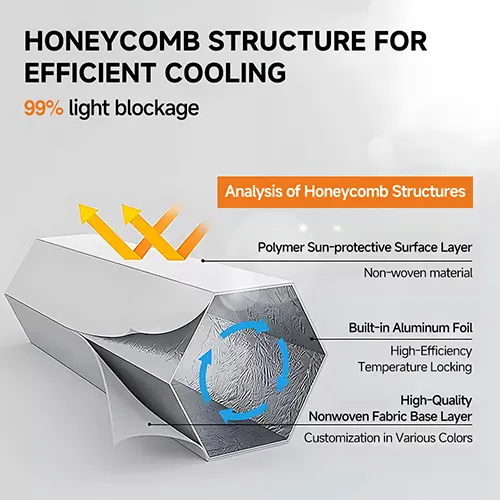
The honeycomb structure creates air-filled cells between layers of fabric. These cells act as an insulating layer between the indoor space and the window, helping reduce direct heat transfer.
This makes non-woven honeycomb blind fabric suitable for window covering systems where thermal performance and indoor comfort are important considerations. The actual insulation performance depends on the fabric construction, cell design, installation method, and overall window system.
3. Helps Improve Energy Efficiency
By adding an insulating layer to the window covering, honeycomb blinds can help reduce heat gain during warmer periods and heat loss during colder periods. This can support more efficient temperature management in residential, commercial, and hospitality spaces.
For building projects, the fabric can therefore be considered as part of an overall window treatment solution rather than simply a decorative material.
4. Flexible Light Control
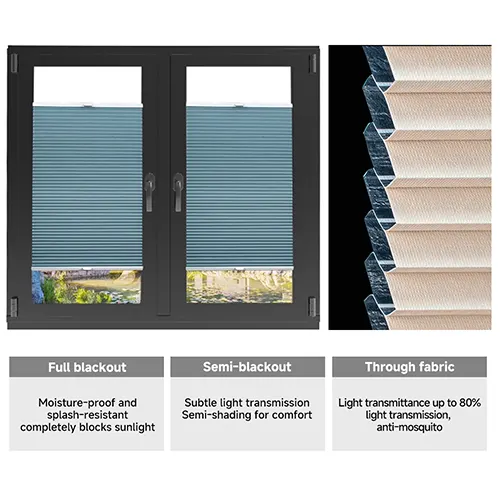
Non-woven honeycomb blind fabric can be produced with different levels of light transmission. Depending on the construction and fabric specification, manufacturers can offer options ranging from light-filtering to more light-blocking designs.
This flexibility allows the same basic honeycomb blind concept to be adapted for bedrooms, offices, hotels, living spaces, and other areas with different daylight requirements.
5. Stable Pleated Structure
The pleated construction is one of the defining characteristics of honeycomb blinds. Non-woven materials can provide a stable base for forming and maintaining the cellular structure when the fabric is properly engineered and processed.
Consistent pleat formation is particularly important for manufacturers producing finished blinds in different sizes. Stable fabric construction can help maintain a clean appearance throughout production and daily use.
6. Multiple Design and Functional Options
Non-woven honeycomb blind fabric is not limited to one appearance or performance level. Different colors, patterns, cell structures, and functional treatments can be developed to meet specific project requirements.
Depending on the intended application, options may include:
Different colors and decorative patterns
Different honeycomb cell structures
Light-filtering or light-blocking configurations
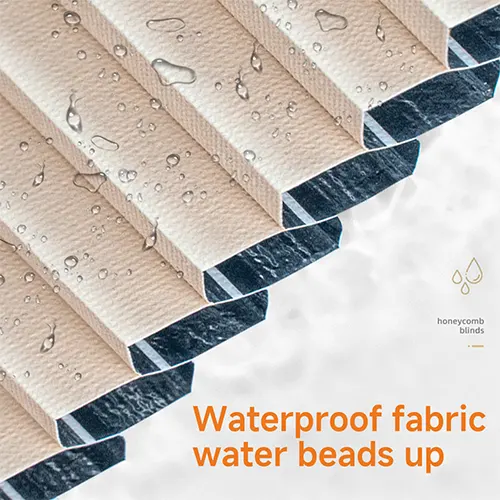
Water-resistant treatments
Flame-retardant options
Different fabric widths
Customized fabric specifications
7. Suitable for Custom Honeycomb Blind Production
For window covering manufacturers and wholesalers, customization is an important consideration when selecting honeycomb blind fabric. Non-Woven Fabric can be developed in different specifications to match particular blind systems and market requirements.
For example, HORNET provides non-woven honeycomb blind fabrics in different cell sizes and constructions, with options for single-hole, hole-in-hole, and side-by-side hole structures, as well as pleated designs. Fabric widths and functional treatments can also be customized according to project requirements.
These options allow buyers to develop different honeycomb blind collections without being limited to a single standard fabric specification.
8. Suitable for Different Window Covering Projects
The combination of lightweight construction, insulation, light control, and design flexibility makes non-woven honeycomb blind fabric suitable for a wide range of applications.
Residential window coverings
Hotel and hospitality projects
Office buildings
Commercial interiors
Apartment developments
Custom window treatment projects
For project-based orders, the fabric specification can be selected according to window size, indoor environment, daylight requirements, and the design of the finished blind.
What Should Buyers Consider When Choosing Non-woven Honeycomb Fabric?
Although non-woven honeycomb fabric offers several advantages, buyers should evaluate the complete specification rather than selecting fabric based on appearance alone. Important factors include cell structure, fabric width, light transmission, functional treatment, color consistency, processing performance, and compatibility with the finished blind system.
For larger projects, buyers should also confirm production capacity, quality control, sample availability, MOQ, and customization capability with the supplier.
Conclusion
Non-woven honeycomb blind fabric combines a lightweight fabric construction with the functional advantages of cellular window coverings. Its thermal insulation, light control, stable pleated structure, and flexible customization make it suitable for a variety of window treatment projects.
For manufacturers and wholesale buyers looking for customized honeycomb blind fabric, working with a supplier that can provide consistent specifications, functional options, and production support can make product development and bulk purchasing more efficient.
Looking for customized non-woven honeycomb blind fabric? Contact HORNET to discuss fabric specifications, cell structures, functional requirements, colors, widths, and OEM/ODM requirements for your next window covering project.