


 English
Honeycomb blinds have become a popular choice for residential and commercial window coverings because they combine a clean appearance with practical performance. Unlike traditional flat window shades, honeycomb blinds feature a cellular structure that creates air pockets inside the shade. This unique design helps improve thermal insulation, light control, privacy, and indoor comfort.
But what are the advantages of honeycomb blinds, and why are they increasingly used in bedrooms, living rooms, offices, hotels, and commercial buildings? The answer lies in the combination of the fabric and the cellular structure.
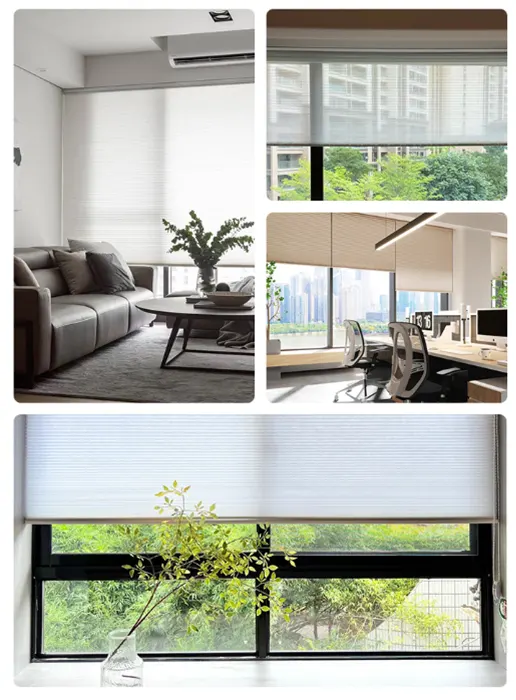
What Are Honeycomb Blinds?
Honeycomb blinds, also known as cellular shades, are window coverings made from specially engineered fabric that is folded and assembled into a series of connected cells. When viewed from the side, the structure resembles a honeycomb or cellular pattern.
The cellular construction creates enclosed or semi-enclosed air pockets between layers of fabric. These air pockets act as an additional barrier between the interior space and the window, helping reduce heat transfer.
The performance of a honeycomb blind depends on several factors, including the fabric material, cell size, pleat structure, fabric thickness, light transmission, and overall construction.
1. Excellent Thermal Insulation
One of the most important advantages of honeycomb blinds is their thermal insulation performance. The cellular structure creates air pockets that help slow the transfer of heat between the window and the room.
During hot weather, honeycomb blinds can help reduce the amount of solar heat entering through windows. During colder seasons, they can provide an additional insulating layer that helps reduce heat loss through the glass.
For this reason, honeycomb blinds can be a practical option for homes and buildings where maintaining a comfortable indoor temperature is important.
2. Improved Energy Efficiency
Windows can be an important source of heat gain and heat loss in a building. By adding an insulating cellular shade over the window, it is possible to reduce the impact of outdoor temperatures on indoor spaces.
This can help reduce the workload of heating and cooling systems. As a result, honeycomb blinds can contribute to improved energy efficiency when they are properly selected and installed.
The actual energy-saving effect depends on factors such as window orientation, glass type, climate, shade design, fabric properties, and installation conditions.
3. Flexible Light Control
Another major benefit is light control. Honeycomb blinds can be manufactured using different types of fabric to meet different lighting requirements.
For example, light-filtering cellular shade fabric allows natural daylight to enter while reducing glare. This can be useful in living rooms, offices, dining areas, and other spaces where natural light is desirable.
For bedrooms, hotels, nurseries, and media rooms, blackout honeycomb fabric can provide stronger light-blocking performance and create a darker indoor environment.
4. Better Privacy
Privacy is another reason why honeycomb blinds are widely used for residential and commercial windows. Depending on the fabric design and light transmission level, the shades can limit visibility from outside while still maintaining a comfortable indoor environment.
For bedrooms and bathrooms, stronger privacy may be preferred. For offices and living rooms, semi-private or light-filtering materials can provide a balance between daylight and privacy.
5. UV Protection
Long-term exposure to direct sunlight can contribute to fading and deterioration of furniture, flooring, curtains, carpets, and other interior materials.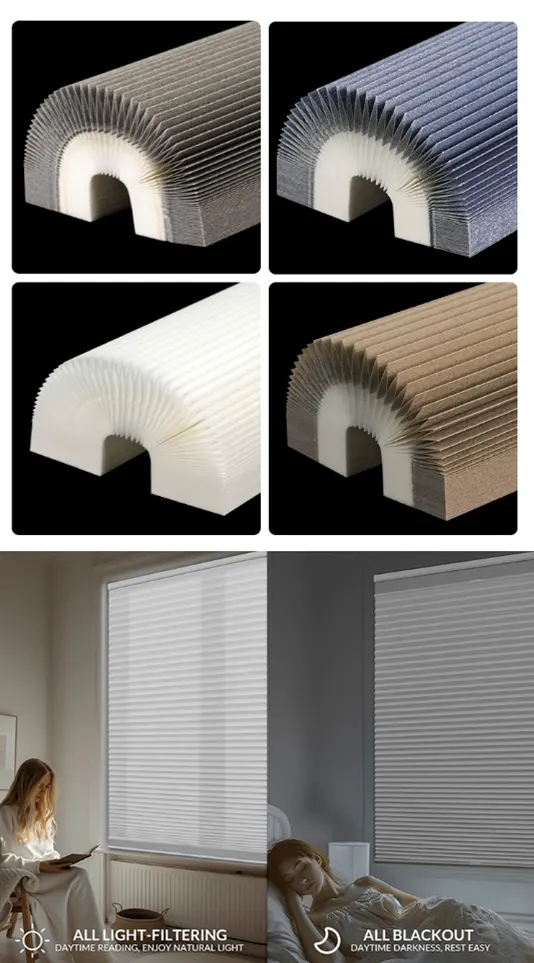
Honeycomb blinds can help reduce direct sunlight entering through windows. Fabrics with appropriate UV-control or solar-control properties can provide additional protection for indoor furnishings.
This makes honeycomb blinds useful for rooms with large windows or windows that receive strong sunlight for extended periods.
6. Helps Reduce Glare
Excessive sunlight can create uncomfortable glare on televisions, computer screens, and work surfaces. Light-filtering cellular shade fabric can help soften incoming daylight and reduce harsh reflections.
This is particularly useful in home offices, meeting rooms, classrooms, and commercial workspaces where visual comfort is important.
7. Potential Noise Reduction
The cellular construction of honeycomb blinds can also provide a degree of sound absorption and buffering. The fabric layers and air pockets can help reduce the transmission of some outdoor noise through the window area.
Honeycomb blinds should not be considered a replacement for dedicated acoustic products, but they can contribute to a quieter and more comfortable indoor environment when combined with suitable windows and other acoustic measures.
8. Lightweight and Clean Appearance
Honeycomb blinds have a simple and modern appearance. Their pleated cellular structure creates a clean visual effect without adding excessive bulk around the window.
The lightweight construction also makes them suitable for a wide range of window designs. Different colors, textures, and fabric finishes can be selected to match different interior styles.
9. Different Fabric Options
The performance and appearance of honeycomb blinds can be adjusted by selecting different fabric materials. Non-woven Honeycomb Fabric is commonly used for cellular shade applications because it can be engineered for consistent thickness, pleating, light control, and thermal performance.
Woven honeycomb fabric provides another option when texture and decorative appearance are important. Different yarn constructions can create different visual effects and performance characteristics.
For applications requiring stronger light control, blackout materials can be selected. For spaces that benefit from natural daylight, light-filtering fabrics may be more appropriate.
| Fabric Type | Main Benefit | Suitable Applications |
|---|---|---|
| Non-Woven Honeycomb Fabric | Consistent structure and functional performance | Homes, offices, hotels |
| Woven Fabric | Texture and decorative appearance | Interior design projects |
| Blackout Fabric | Strong light blocking and privacy | Bedrooms, hotels, media rooms |
| Light-Filtering Fabric | Soft daylight and glare control | Living rooms, offices, classrooms |
10. Suitable for Different Window Applications
The flexibility of honeycomb blinds makes them suitable for many different window applications. They can be used in both residential and commercial environments.
Bedrooms: Blackout or room-darkening fabrics can improve privacy and light control.
Living Rooms: Light-filtering fabrics can provide comfortable daylight while reducing glare.
Home Offices: Cellular shades can help control glare on computer screens and reduce solar heat.
Hotels: Blackout and thermal insulation options can improve guest comfort.
Schools: Light control can help create a more comfortable environment for learning.
Commercial Buildings: Thermal and solar-control properties can support indoor comfort and energy-efficiency goals.
11. Customization for Different Requirements
Another advantage of honeycomb blinds is the flexibility available during product development. Manufacturers can select different materials, colors, widths, structures, and performance characteristics according to the target market.
For B2B projects, custom honeycomb fabric can be developed according to specific requirements. Depending on the supplier and production capabilities, customization may include fabric material, color, thickness, width, cell structure, light-control level, and other specifications.
This flexibility is particularly valuable for blind manufacturers, wholesalers, interior designers, and large-scale window treatment projects.
What Should You Consider When Choosing Honeycomb Blinds?
Although honeycomb blinds offer many advantages, the right product should be selected according to the actual application. Before choosing a fabric or shade structure, consider the following factors:
Light Control: Decide whether the room requires light filtering, room darkening, or blackout performance.
Thermal Performance: Consider the window orientation, local climate, and required insulation level.
Privacy: Choose an appropriate fabric according to the visibility requirements of the room.
Fabric Material: Compare non-woven and woven options according to the desired appearance and performance.
Cell Size: Select a cellular structure that matches the window size and shade design.
Color: Consider both interior decoration and solar heat exposure when selecting colors.
Customization: For large projects, confirm available widths, colors, materials, and production capabilities.
Are Honeycomb Blinds Better Than Traditional Blinds?
Honeycomb blinds offer several performance advantages that may not be available to the same extent with conventional flat blinds. Their cellular structure provides additional insulation while also allowing manufacturers to offer different levels of light control and privacy.
However, there is no single window covering that is ideal for every application. Traditional roller blinds, venetian blinds, curtains, and other window treatments may be more appropriate depending on the design, budget, maintenance requirements, and functional needs.
The main advantage of honeycomb blinds is their ability to combine thermal insulation, light control, privacy, and a clean appearance within one cellular shade system.
FAQs
Are honeycomb blinds good for insulation?
Yes. The cellular structure creates air pockets that can help reduce heat transfer through the window area. The actual insulation performance depends on the fabric, cell structure, window, installation, and environmental conditions.
Do honeycomb blinds block sunlight?
It depends on the fabric. Light-filtering fabrics allow some daylight to enter, while blackout honeycomb fabrics are designed for stronger light-blocking performance.
Are honeycomb blinds suitable for bedrooms?
Yes. Honeycomb blinds are suitable for bedrooms, especially when blackout or room-darkening fabric is selected. They can provide privacy, light control, and thermal insulation.
What is the difference between woven and non-woven honeycomb fabric?
Woven fabric is produced by interlacing yarns and can provide a distinctive textile texture. Non-Woven Fabric is manufactured through a different fiber-processing method and can offer a consistent surface and structure. The better choice depends on the shade design and application requirements.
Can honeycomb blinds be customized?
Yes. Depending on the manufacturer, custom options may include fabric material, color, width, thickness, cellular structure, and light-control performance.
Looking for Custom Honeycomb Blinds Fabric?
If you are looking for non-woven honeycomb fabric, woven honeycomb fabric, blackout cellular shade fabric, or custom honeycomb blinds fabric, a professional fabric manufacturer can help match the material and cellular structure to your specific application. Discuss your required material, width, color, structure, and performance requirements to develop a suitable solution for your window shade products.