


 English

Selecting Cellular Shade Fabric for a Nordic blind collection involves more than choosing a color and requesting a price. Blind manufacturers, window covering brands, and importers need materials that support the intended light-control function, fit their production systems, and remain consistent across repeat orders.
For businesses serving Sweden, Norway, Denmark, Finland, and Iceland, seasonal daylight changes are an important part of product planning. Bedrooms may require strong light blocking during bright summer evenings, while living spaces benefit from fabrics that preserve useful daylight. A successful collection should address these different applications with clearly specified fabric options.
What Is Cellular Shade Fabric?
Cellular shade fabric is the material used to form the hollow cells of a honeycomb window blind. The structure expands when the blind is lowered and folds into a compact stack when raised. It is also commonly described as Honeycomb Blinds Fabric, honeycomb shade fabric, or cellular blind fabric.
Unlike a simple pleated sh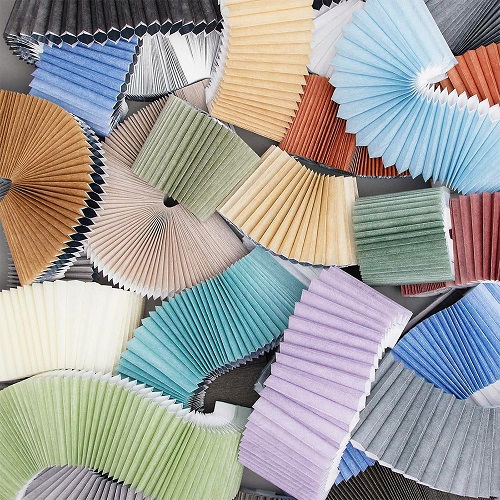 et, a cellular construction contains enclosed air spaces. These spaces contribute to the insulating function of the finished shade, although actual performance depends on the complete product, window fit, installation, and operating conditions.
Buyers should clarify the supply format at the start of an inquiry. Base material for further processing, preformed honeycomb material, and prepared fabric panels require different production capabilities and should be quoted separately.
Match the Fabric to the Intended Room
Nordic countries do not represent one uniform application. Requirements vary with location, window orientation, room use, and customer expectations. Organizing a fabric collection by application helps distributors and retailers explain the product more clearly.
| Application | Suggested Fabric Direction | What Buyers Should Check |
|---|---|---|
| Living rooms | Light-filtering cellular shade fabric | Daylight diffusion, color appearance, and evening privacy |
| Bedrooms | Blackout Honeycomb Blinds Fabric | Material opacity and light gaps around the finished blind |
| Home offices | Fabric selected for the required balance of light and glare control | Performance near screens under the intended window exposure |
| Hospitality interiors | Fabric matching the project's appearance and performance requirements | Documentation, batch consistency, and replacement availability |
| Large windows | Construction validated at the proposed blind dimensions | Cell stability, material weight, stacking, and smooth operation |
Compare Light-Filtering and Blackout Materials
Light-filtering cellular shade fabric allows diffuse daylight through the material. It can suit rooms where customers want a covered window without removing most natural light. However, privacy depends on the fabric and the balance between indoor and outdoor lighting. Check for visible silhouettes before making a nighttime privacy claim.
Blackout honeycomb blinds fabric is designed to block light through the material itself. It is relevant to bedroom collections, particularly where customers want to manage long summer daylight hours. Room darkness still depends on the finished blind because light may enter around the sides, headrail, and bottom edge.
Specify Cell Dimensions and System Compatibility
When comparing a cellular shade fabric manufacturer, request a clear definition of cell dimensions. Confirm how the supplier measures the material and whether dimensions refer to an expanded or folded condition. Agree on tolerances as well as nominal sizes.
Single-cell and double-cell constructions differ in their arrangement and may affect stacking, weight, and assembly. Neither should be selected by appearance alone. Test the proposed material with your headrail, bottom rail, lifting components, and intended finished dimensions.
For OEM cellular shade fabric, a full operating sample is more informative than a small swatch. It shows whether the material folds evenly, aligns correctly, and works with the chosen blind system.
Develop a Consistent Color Collection
White, off-white, gray, beige, and muted shades can provide a starting point for a Nordic-facing collection. Final selections should reflect feedback from your local dealers and customers rather than assuming one palette suits every market.
When ordering custom honeycomb blinds fabric, approve physical samples under agreed lighting conditions. Compare both reflected light and transmitted light, since backlighting can change the perceived color. Specify the appearance of the room-facing and window-facing surfaces.
Keep an identified reference sample for repeat orders. This is especially useful when customers add more blinds to the same room after the original installation.
What to Send a Cellular Shade Fabric Supplier
Target countries and intended room applications.
Required supply format and fabric construction.
Light-filtering or blackout requirements.
Cell dimensions, usable width, and tolerances.
Physical color references and quantities per color.
Blind system details and sample requirements.
Required documentation and packaging specifications.
Delivery destination and purchasing schedule.
Frequently Asked Questions
Are cellular shade fabric and honeycomb blinds fabric the same product?
The terms commonly describe materials for the same type of window covering. Confirm the construction and processing stage because suppliers may offer different supply formats under similar names.
Which fabric is most suitable for a Nordic collection?
The choice depends on the application. Light-filtering options serve daytime living spaces, while blackout options address stronger light-control needs. Many collections benefit from offering both.
Can a fabric specification establish energy savings?
No. Thermal performance should be assessed using evidence relevant to the finished shade and installation. Fabric construction alone does not establish a fixed energy-saving percentage.
Plan Your Nordic Fabric Collection
Preparing a new window covering range? Send your application details, cell specifications, color references, and expected quantities to discuss cellular shade fabric samples and a quotation for your project.