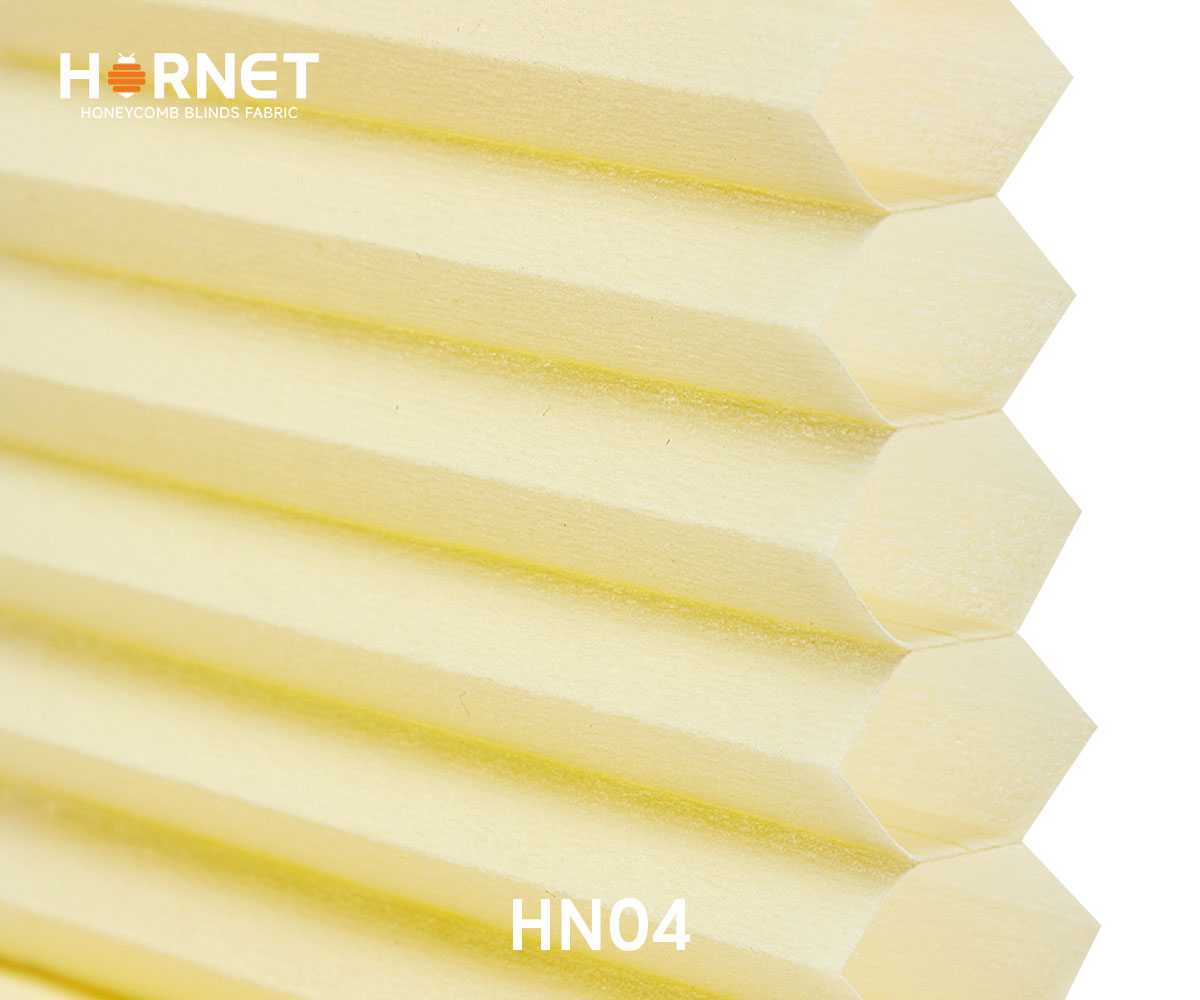
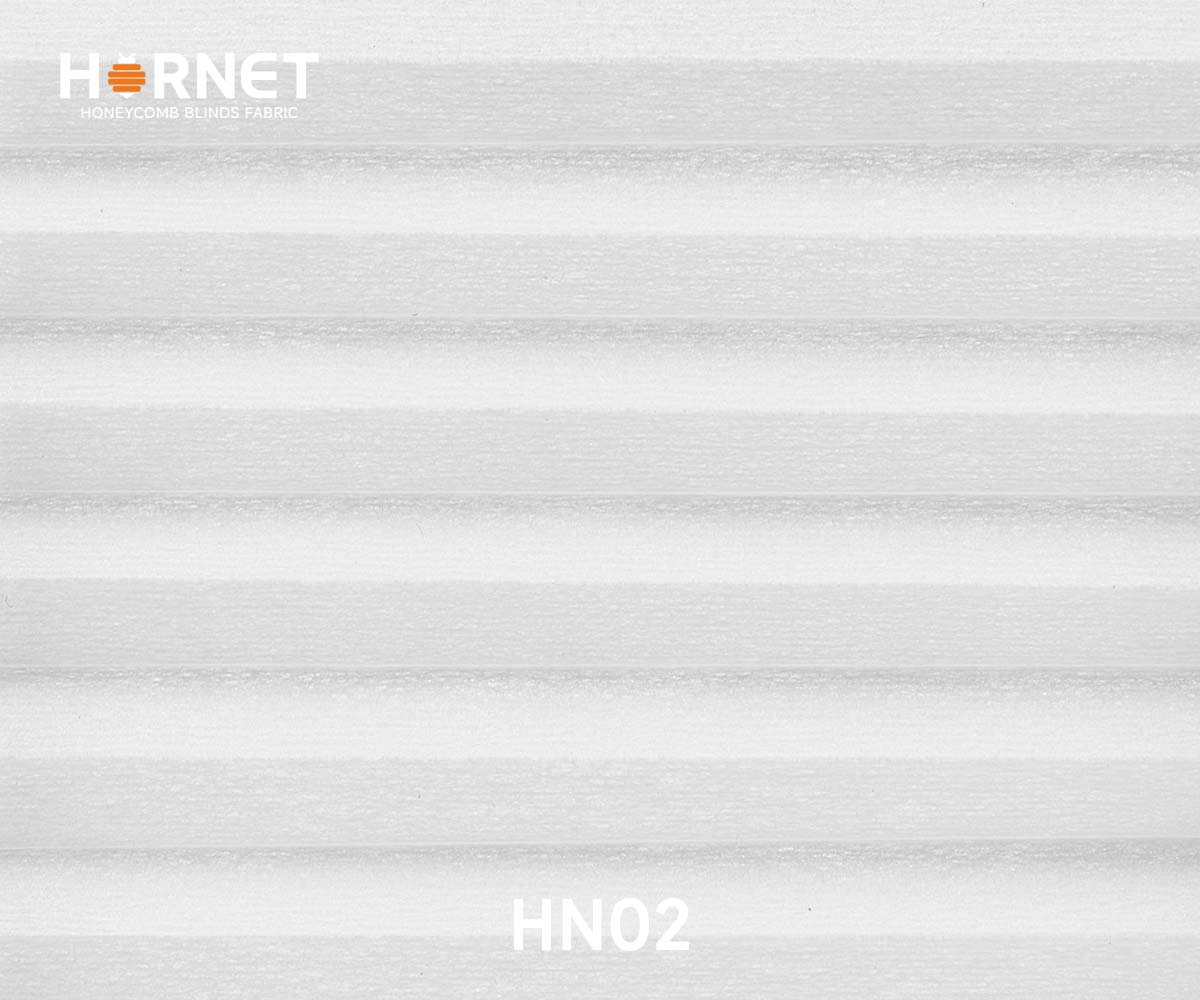
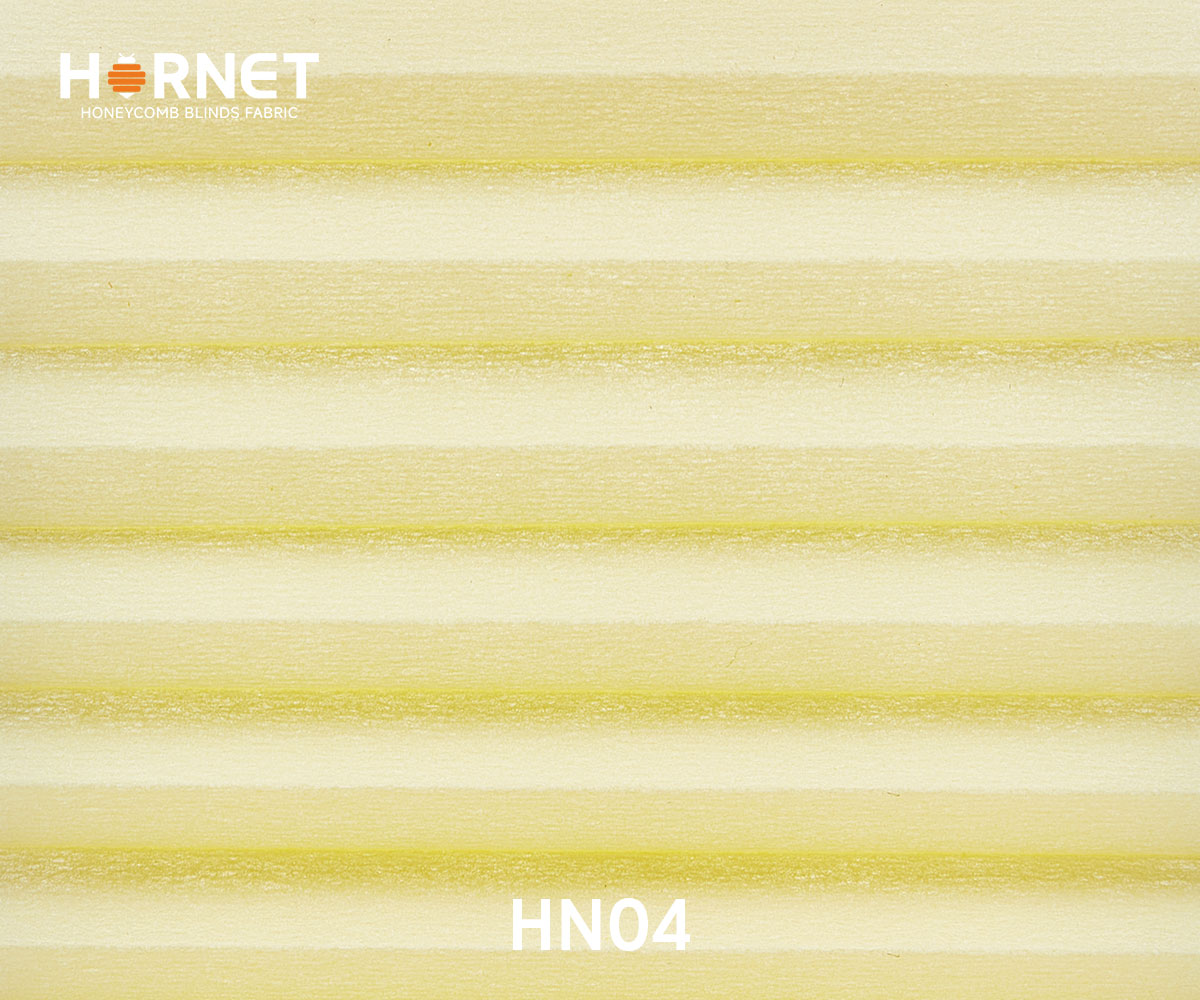
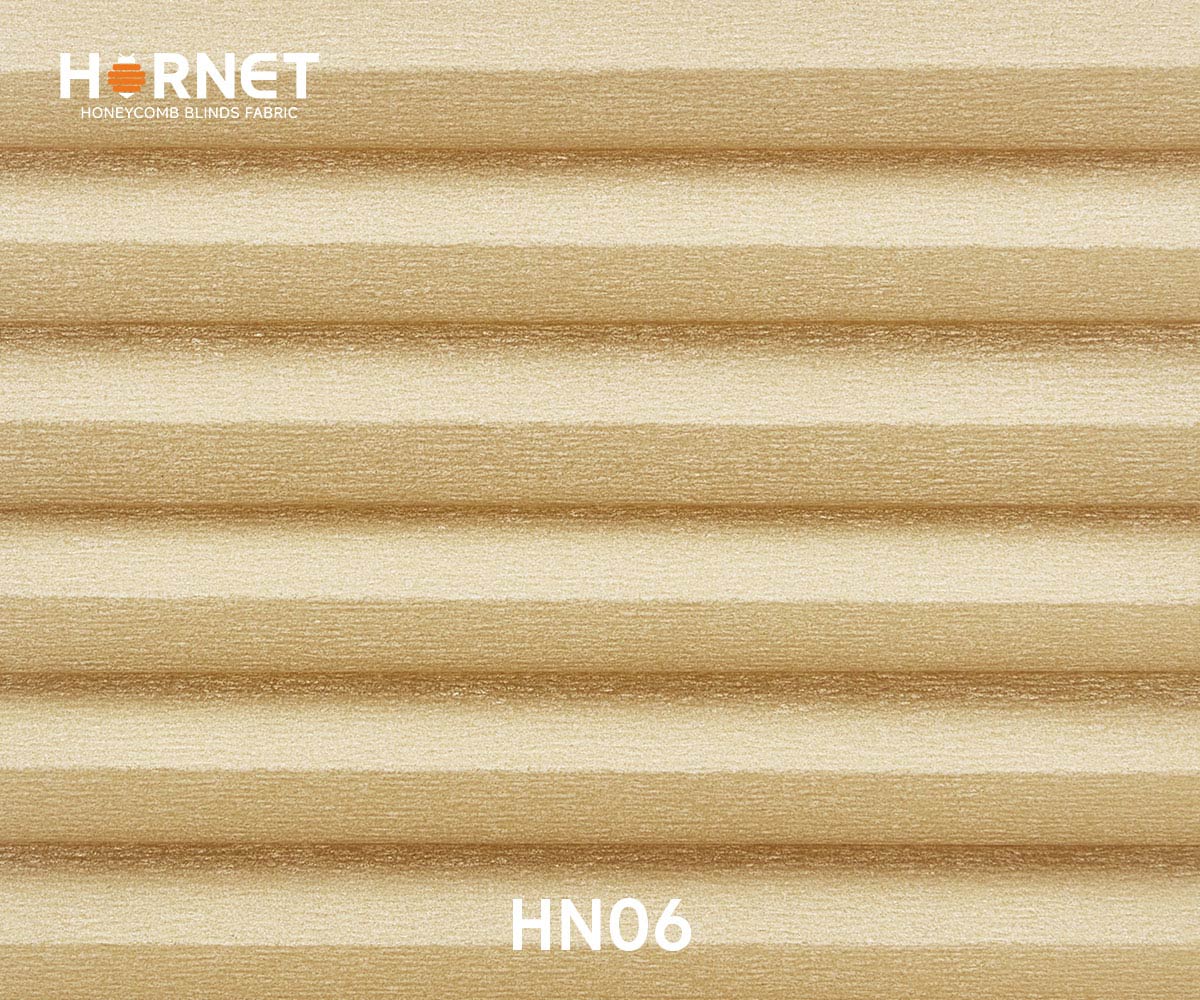
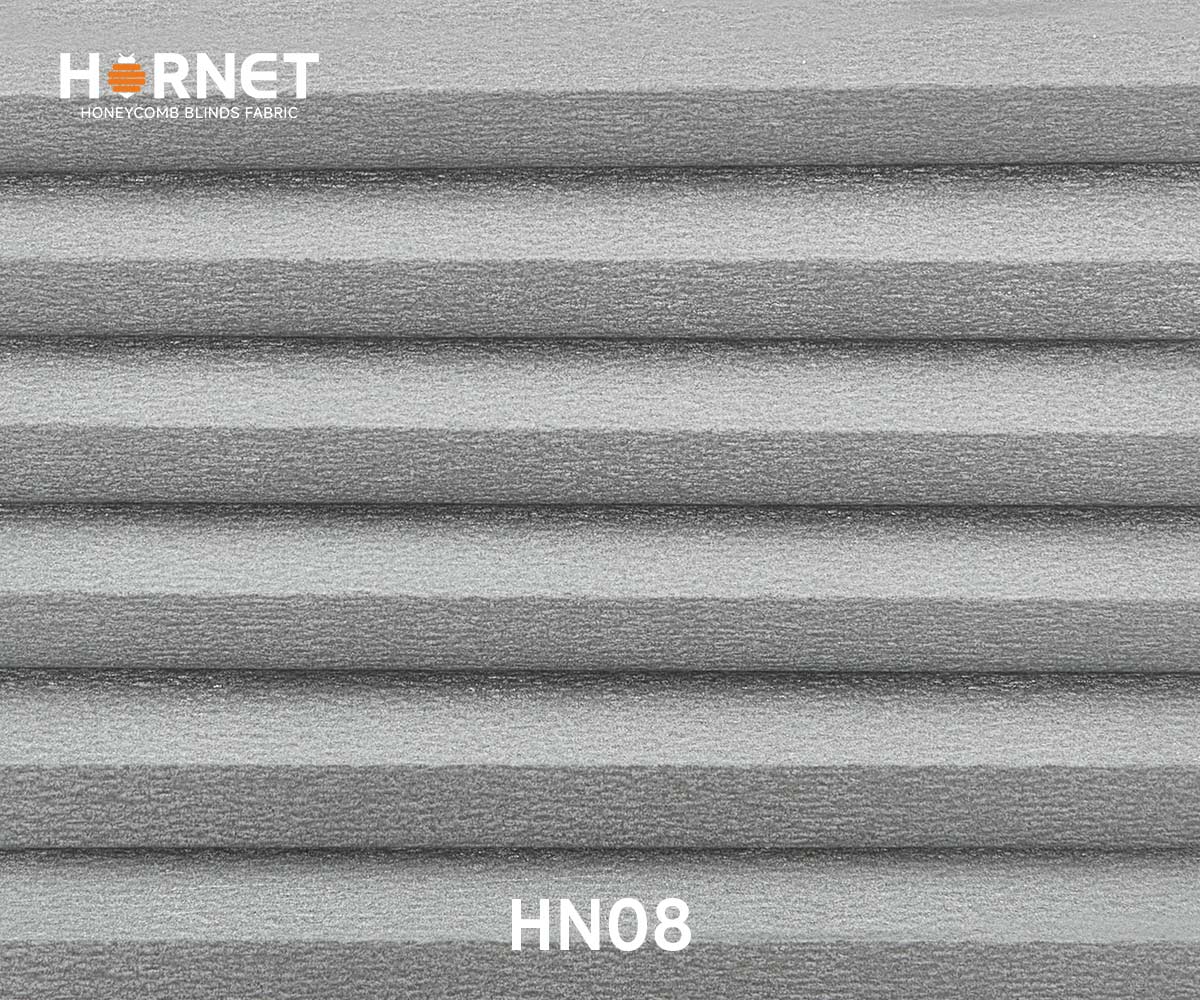
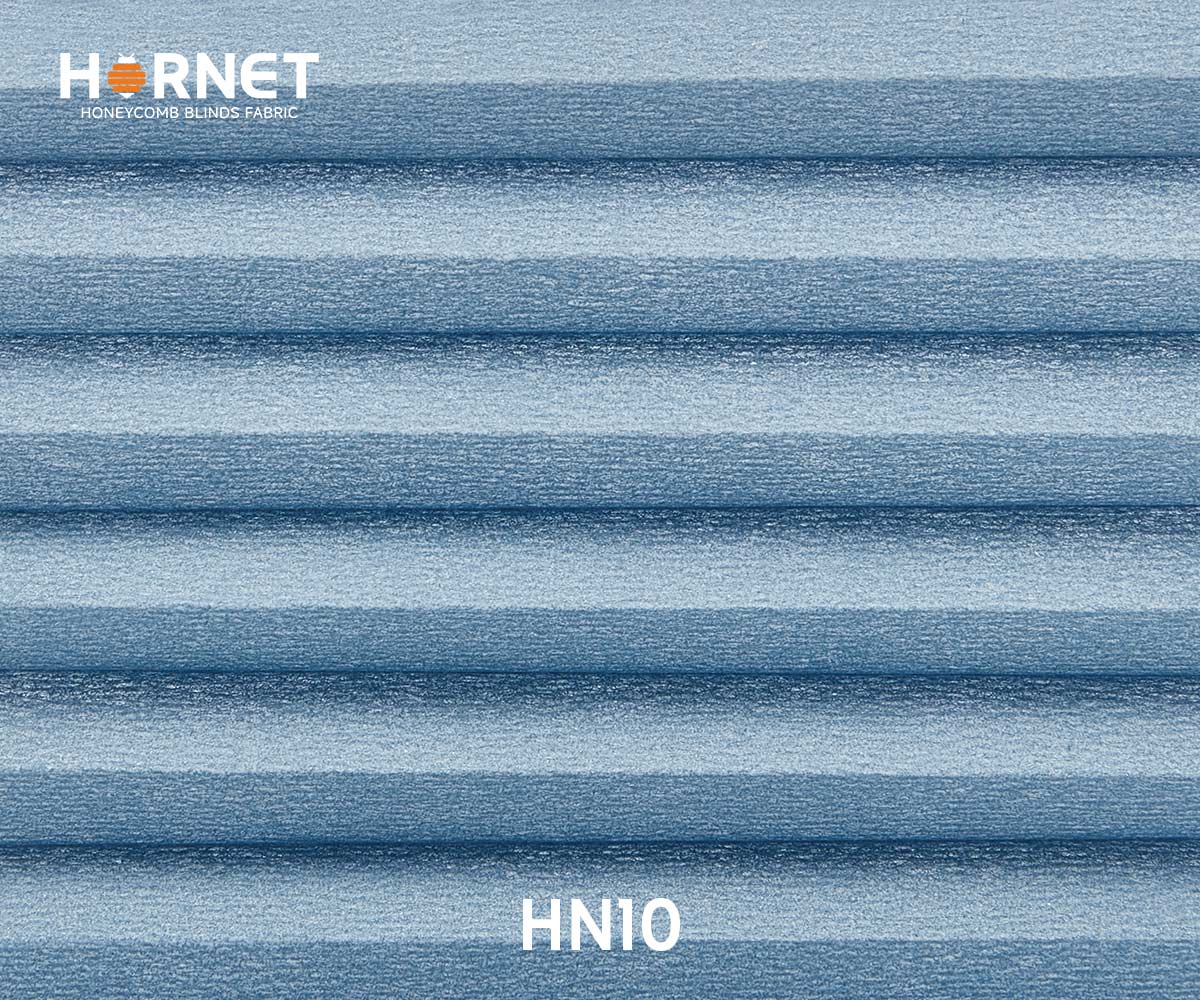
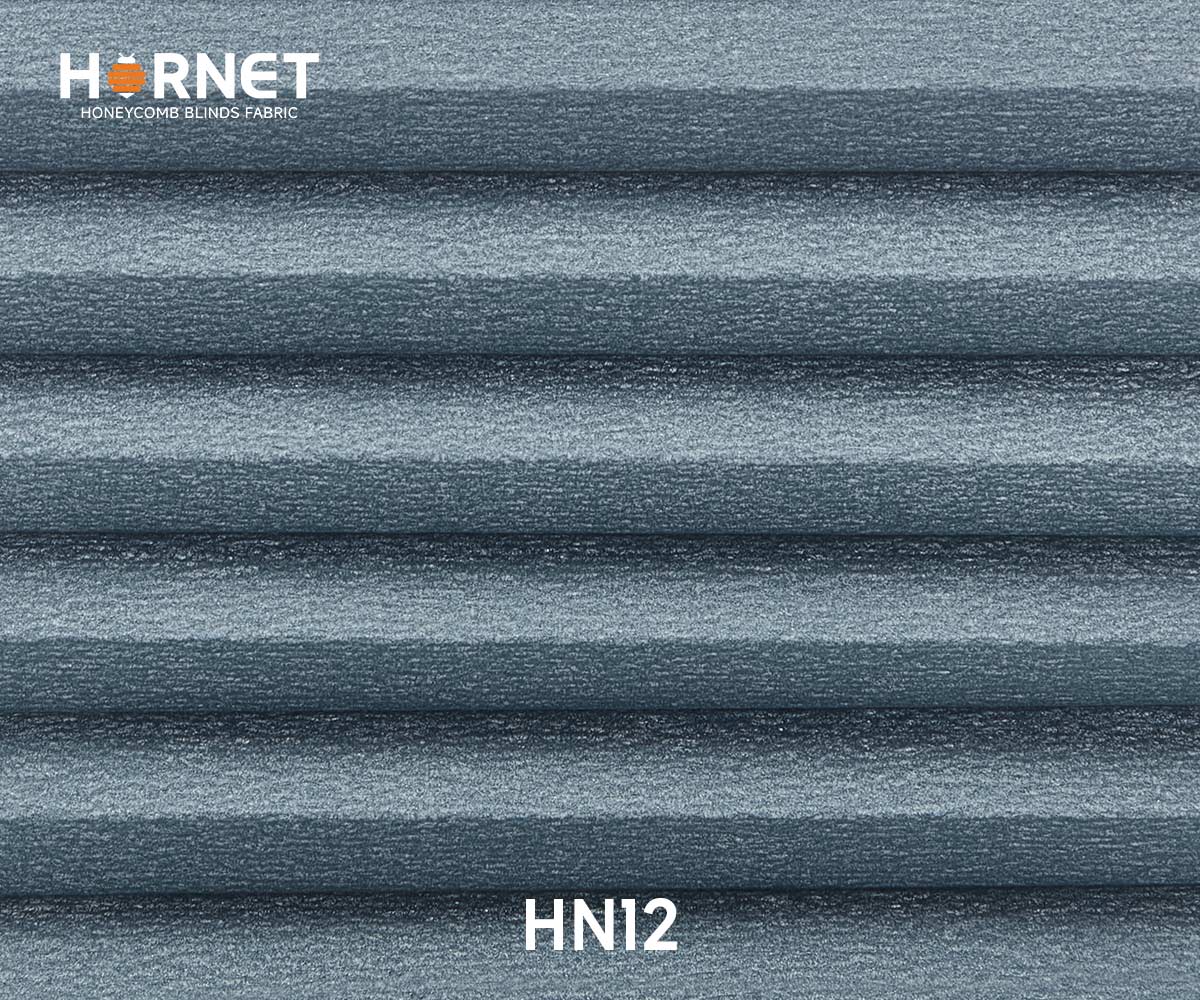
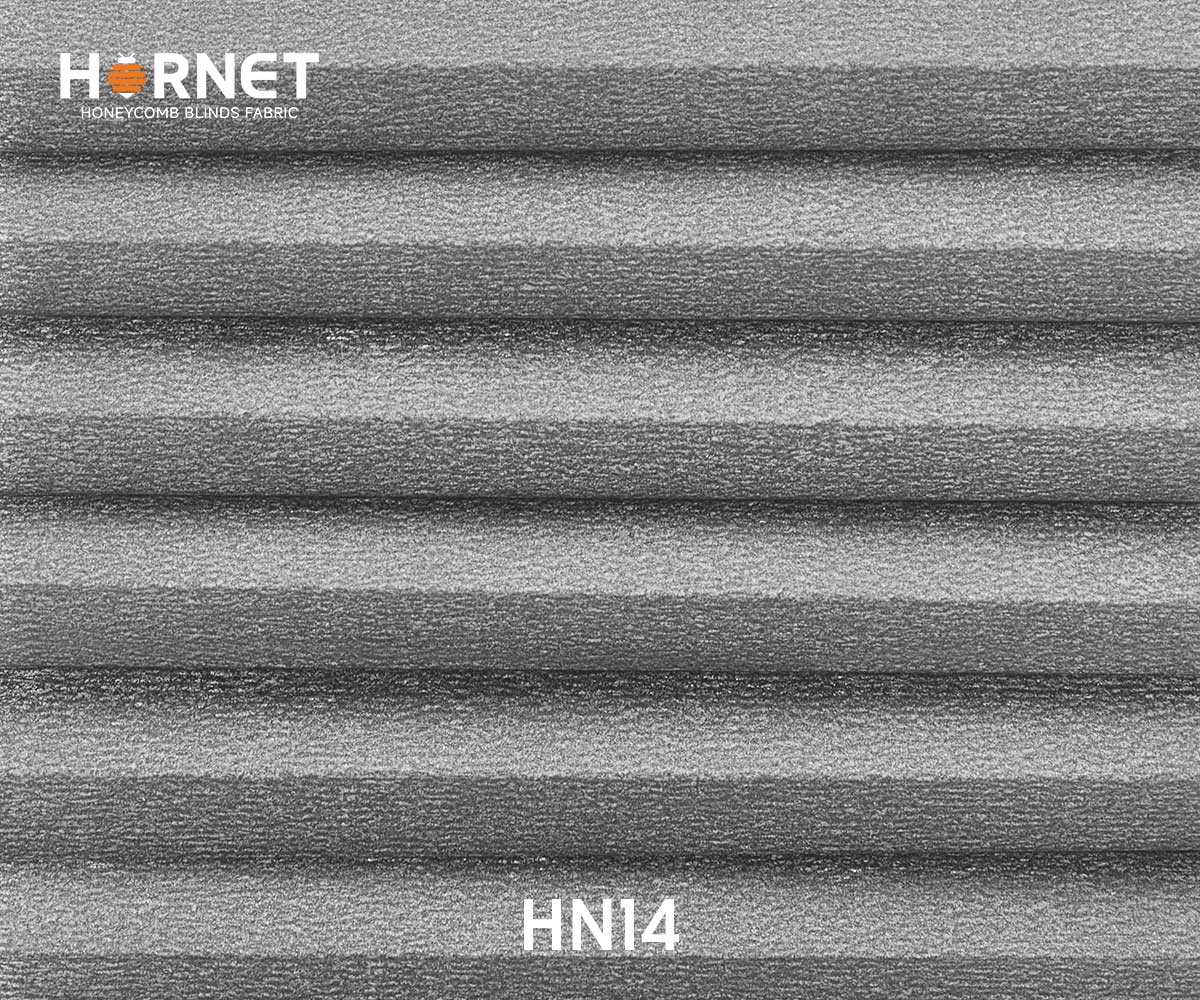
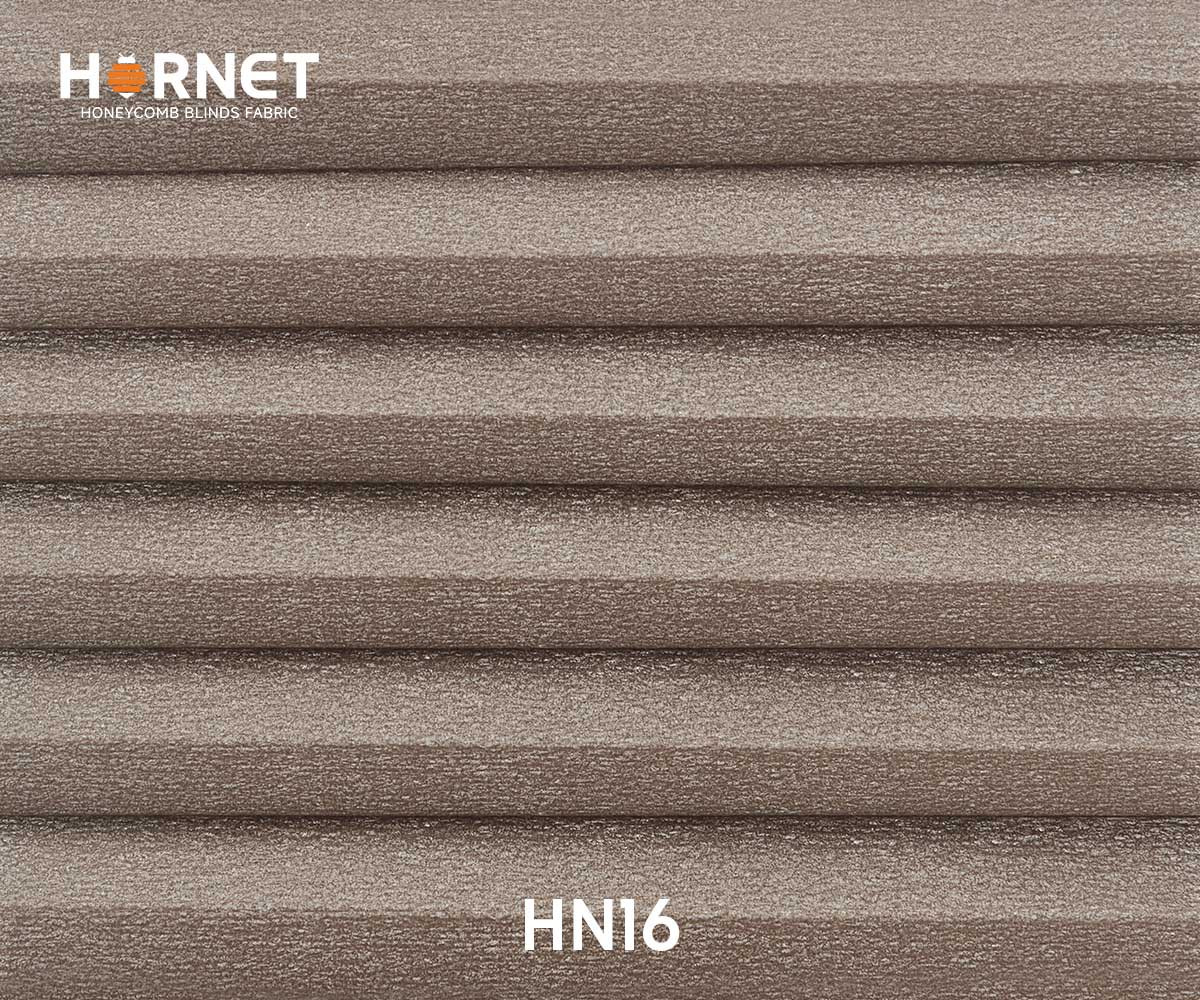
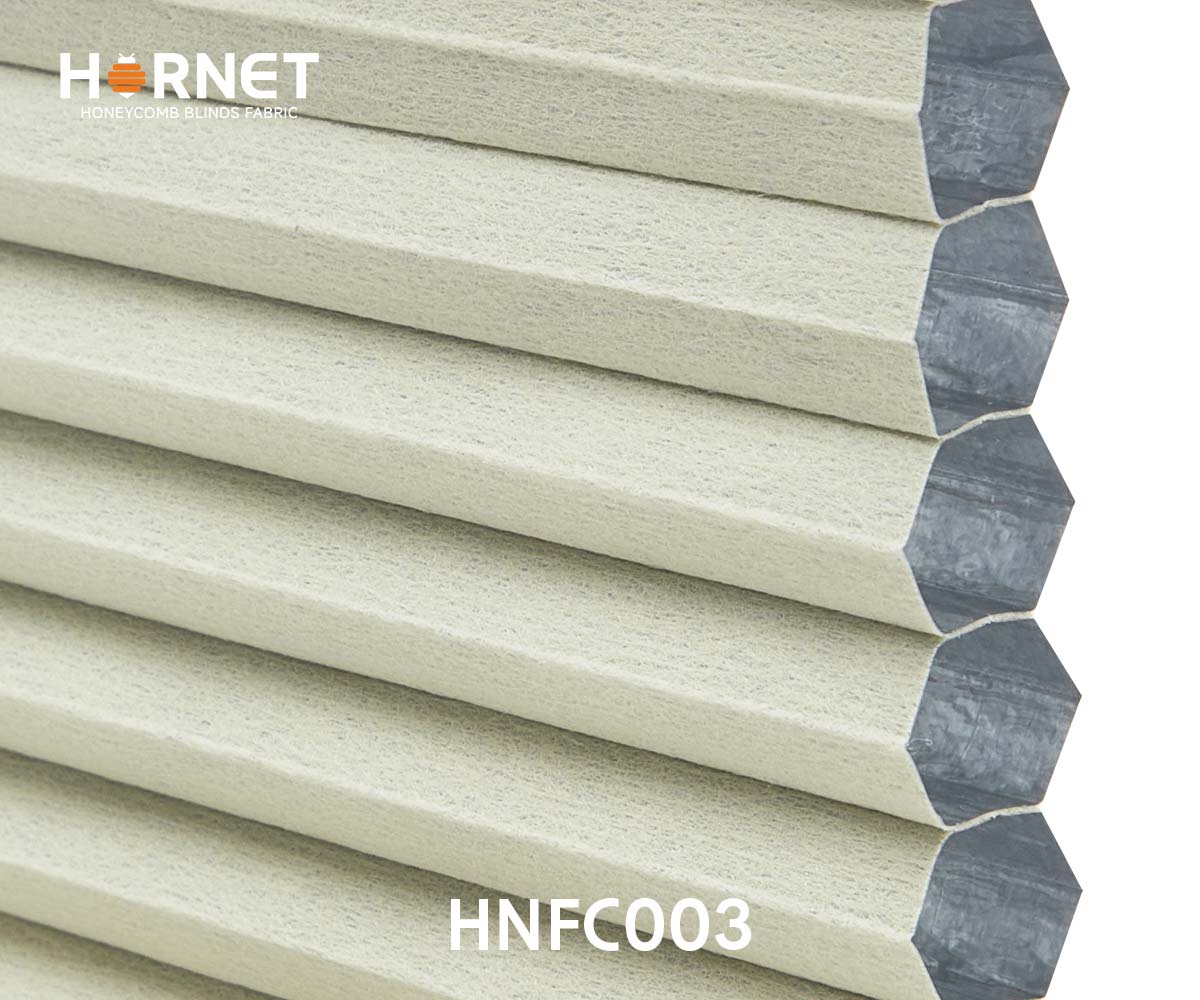
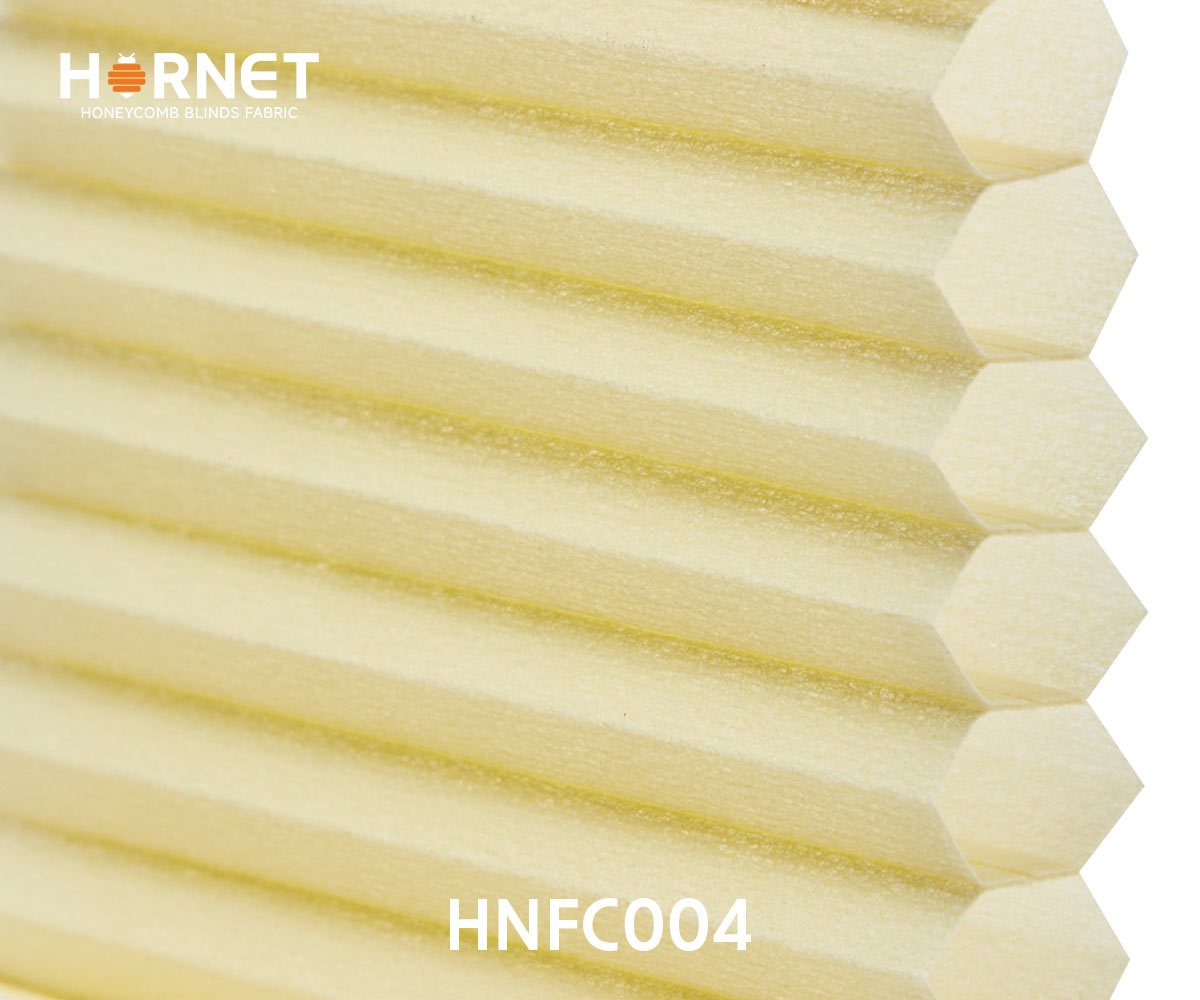
The 20mm light-filtering nonwoven honeycomb blind fabric gives the window a more open pleat pattern than the fine 16mm format. Its folded surface remains clearly visible as daylight passes through the nonwoven material, combining textile coverage with a softly lit window. This proportion suits living and dining interiors where the shade is often left lowered during the day. Color and fold shape provide the decorative detail, allowing the plain fabric to work with different furniture and wall finishes. HORNET supplies this cellular shade fabric in sample-book colors and supports custom palettes for brand collections.
A Broader Pleat Scale
The 20mm profile gives the cellular fabric a more open visual rhythm than the smaller 16mm format. The pleat faces become a more noticeable part of the window treatment, while the nonwoven surface keeps the material appearance simple.
Light and Texture on the Same Surface
Daylight passing through this light-filtering cellular shade fabric illuminates the nonwoven face and its folds. The window remains covered by a textile surface while light enters the room. This combination makes the fabric useful in collections where the appearance of the lowered shade matters throughout the day.
Coordinated Colors for Room Collections
The 20mm light-filtering range can form the daytime part of a coordinated shade collection. Customers can select sample-book colors or develop their own palette for residential ranges and commercial interiors. A blackout option is also available in the 20mm collection for rooms with a different light-control purpose.
Request 20mm Light-Filtering Fabric Samples
Discuss your color palette and wholesale honeycomb shade fabric requirements with HORNET.
1. Daylight as Part of the Room Design
The light-filtering construction allows a room to receive diffused daylight through a lowered shade. It supports interiors where a naturally lit atmosphere is preferred during daytime use.
2. A Clearly Defined Cellular Pattern
The 20mm folds add a visible pattern to the nonwoven surface. Fabric color and pleat geometry can both contribute to a collection that uses plain materials rather than printed designs.
3. A Daytime Option within a Wider Product Range
Brands can offer 20mm light-filtering and blackout fabrics as separate choices under the same cell-size category. This allows the collection to address daytime living spaces as well as rooms intended for stronger light blocking.
Living and Dining Rooms
The fabric suits rooms where daylight, furniture and window texture are considered together. Its visible pleat pattern adds a cellular detail to the window without relying on a printed motif.
Reception Areas and Hospitality Lounges
Light-filtering shades can provide a fabric-covered window in daytime reception and lounge settings. The nonwoven surface and custom color options can coordinate with seating, counters and wall finishes.
What is the main difference between 16mm and 20mm light-filtering fabric?
The cell size changes the visual scale of the pleats. The 16mm option gives a finer pattern, while 20mm presents a broader cellular profile. Both belong to the light-filtering category.
Does the larger size make 20mm more light blocking?
Cell size alone does not determine fabric opacity. This product remains a light-filtering construction; blackout is a separate fabric option in the 20mm range.
Will light-filtering and blackout colors look identical?
Different constructions and transmitted light can affect how the same color reference appears. Coordinated colors can be developed, but the two fabric types are not described as visually identical in every lighting condition.
Can the fabric be supplied for a branded collection?
Yes. HORNET supports OEM and ODM cooperation covering custom colors, fabric requirements and packaging. We supply fabric to window-covering manufacturers, brands and wholesale buyers.



 English