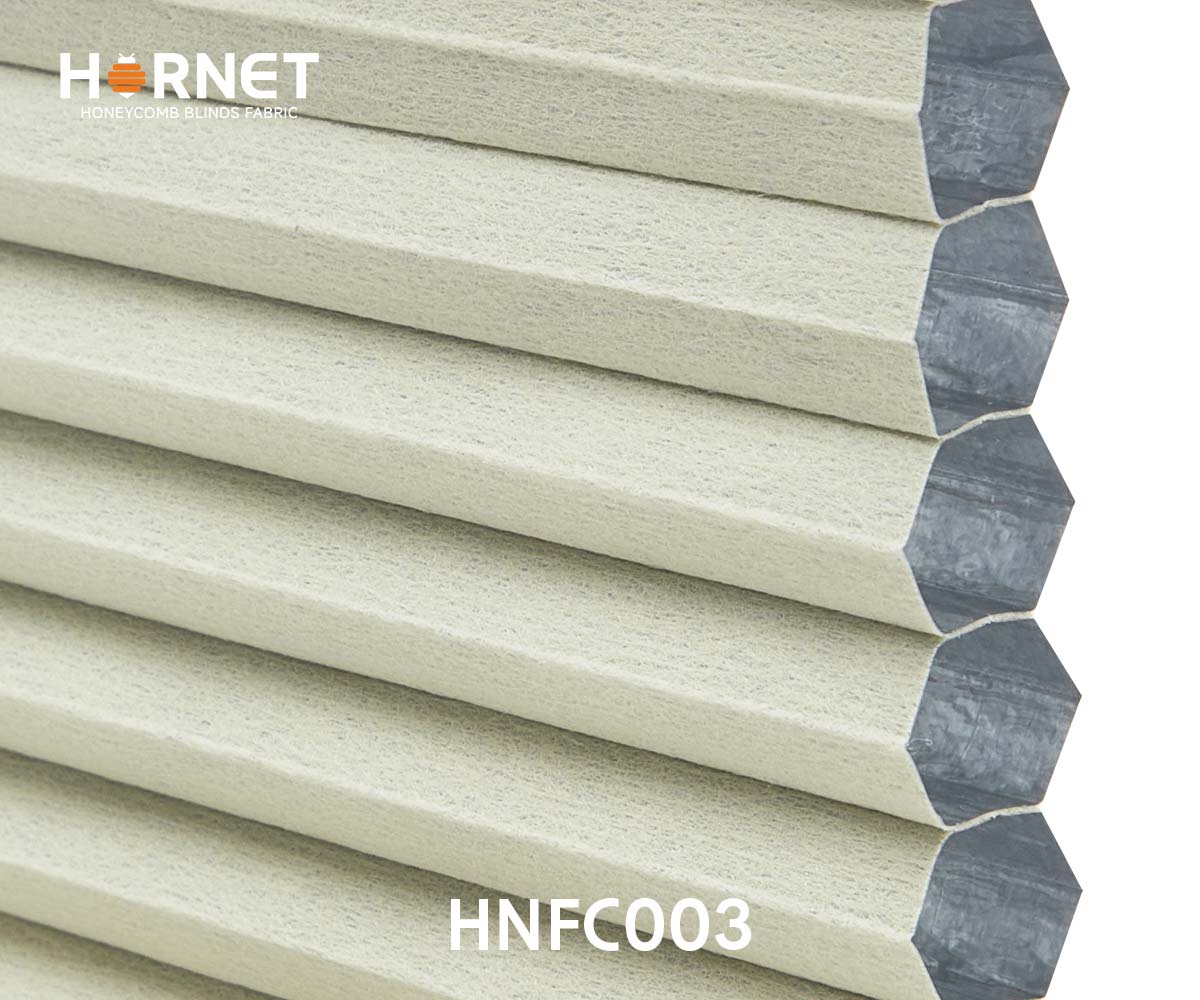
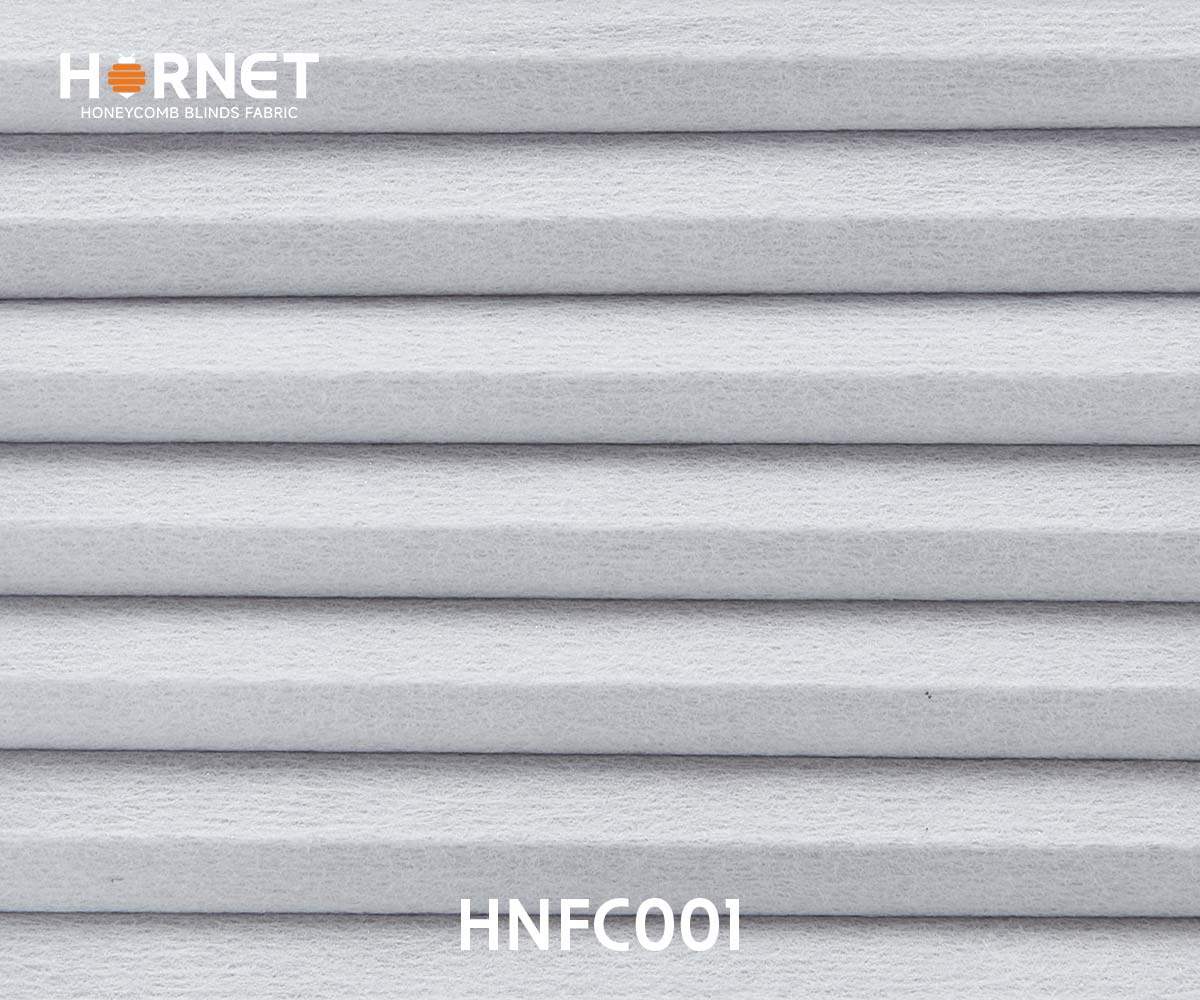
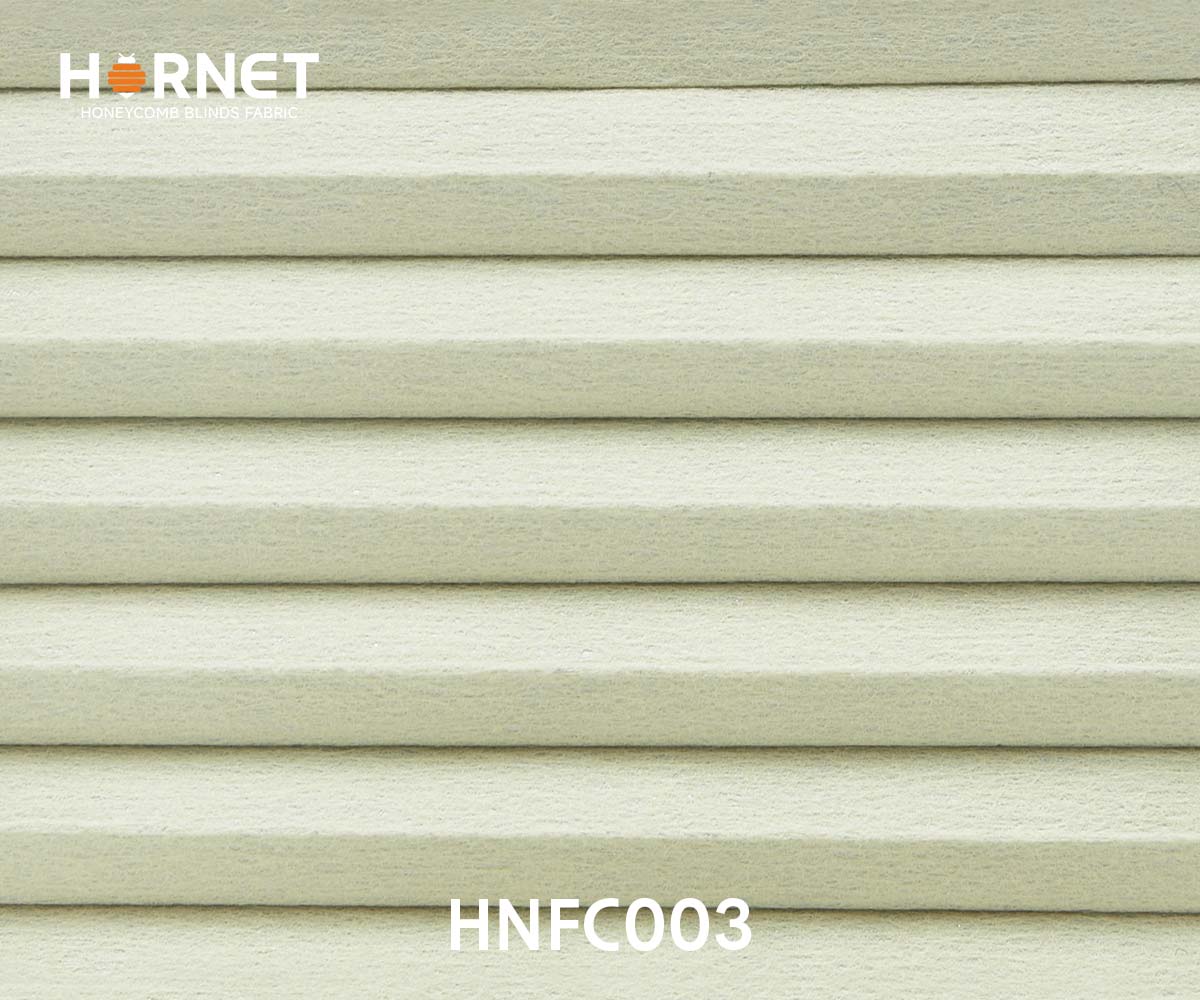
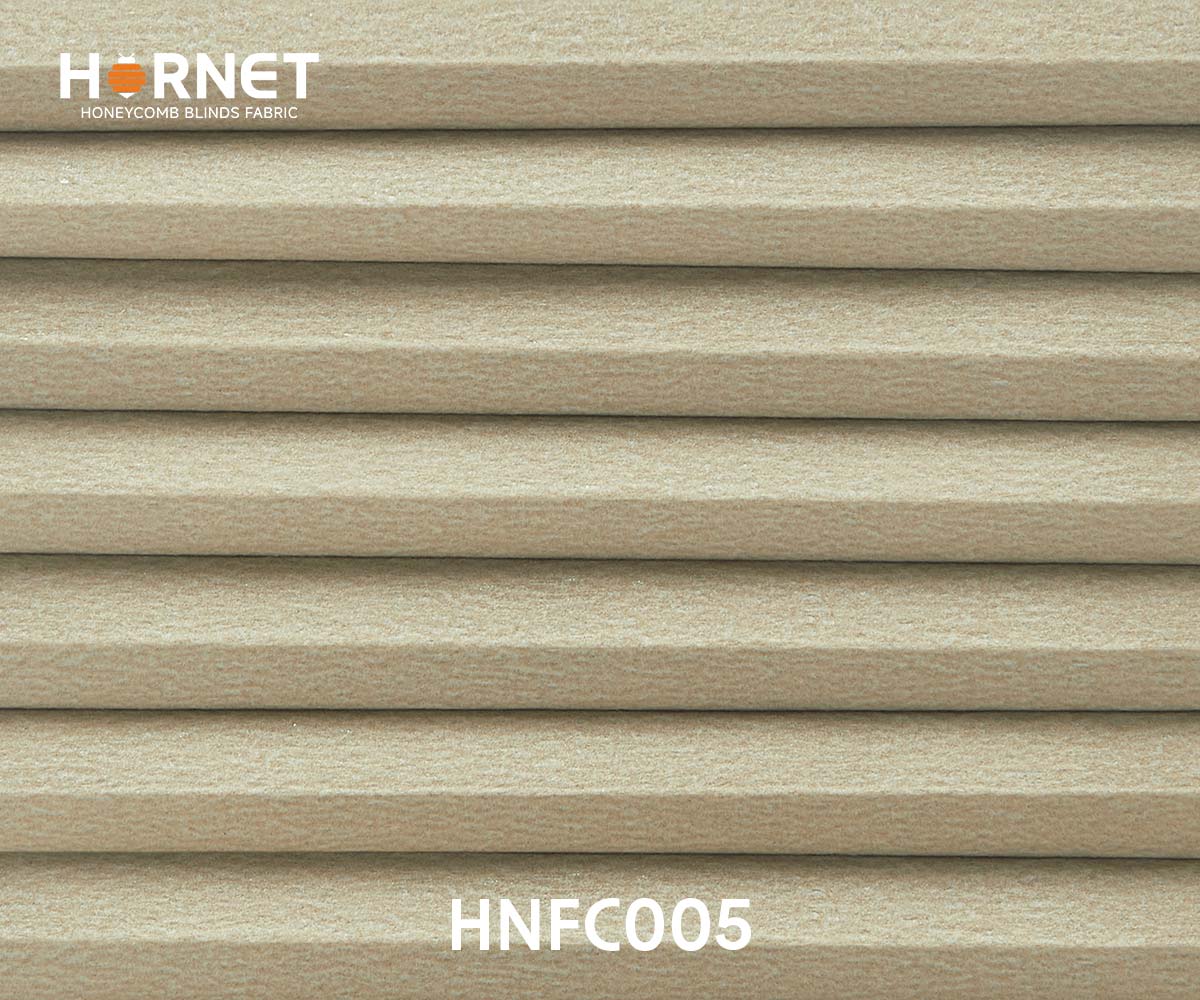
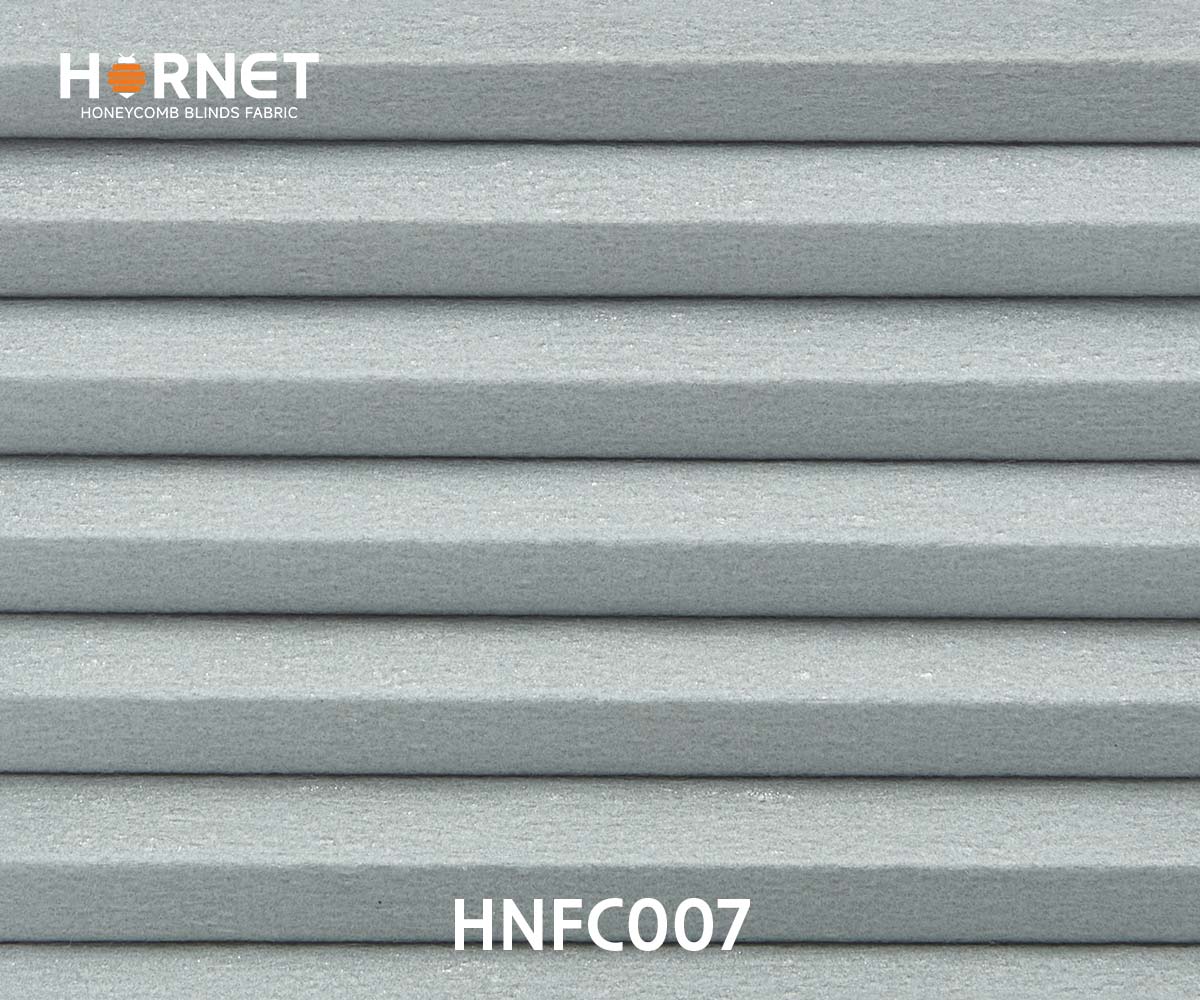
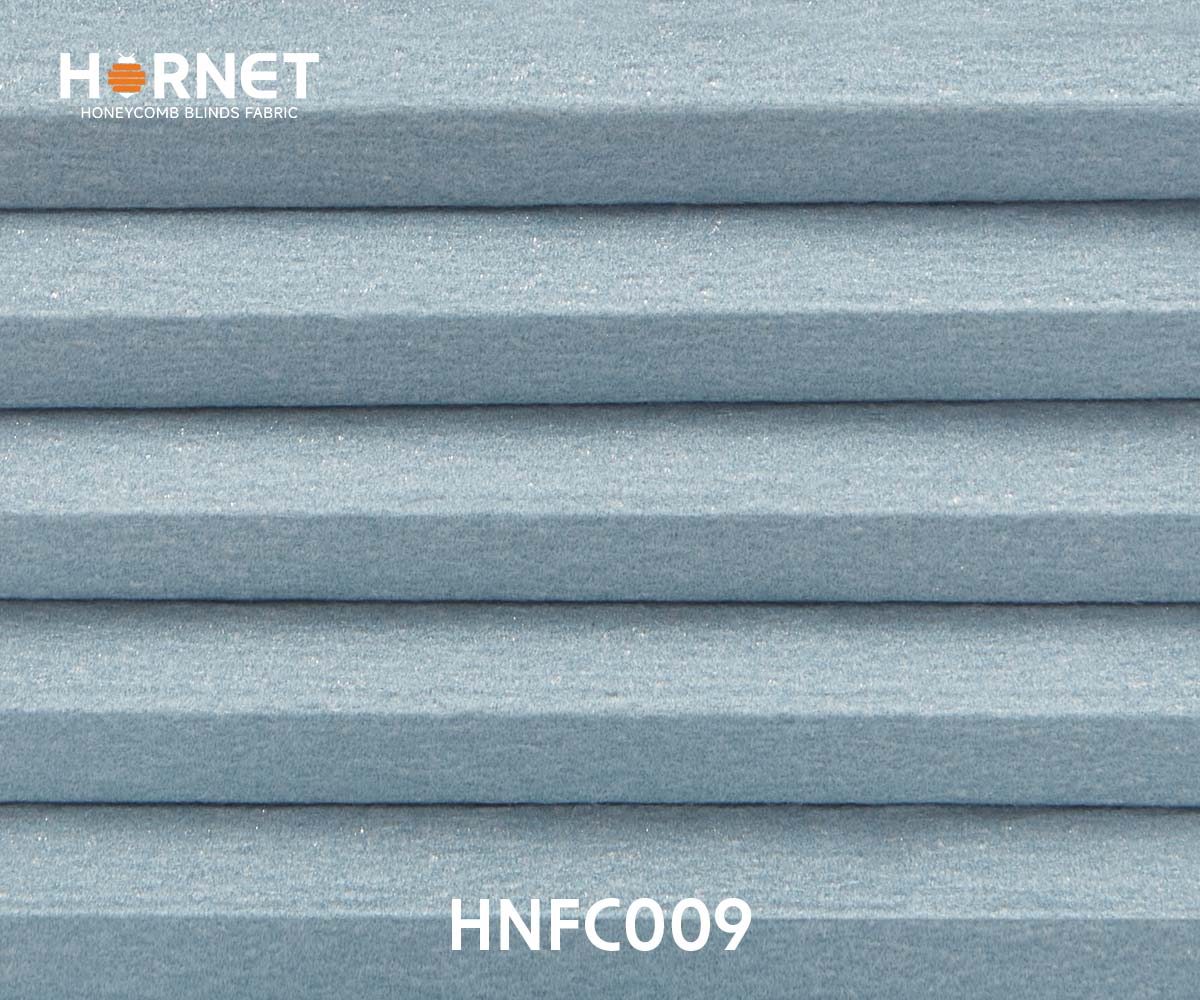
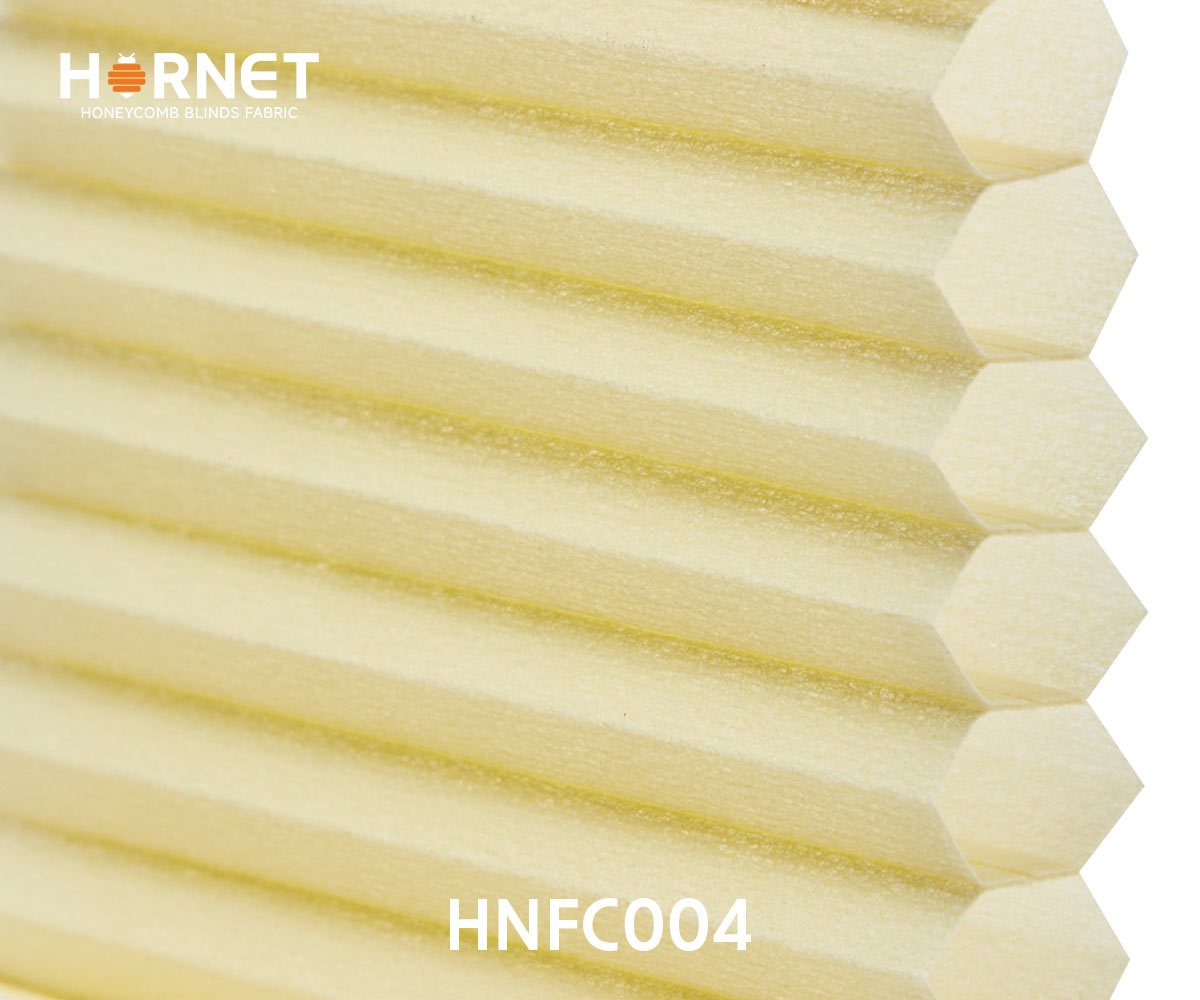
HORNET 16mm blackout nonwoven honeycomb blind fabric combines a single row of hollow cells with an opaque fabric construction. Seen from the front, its closely repeated pleats create fine horizontal lines; viewed from the side, the cells form the familiar honeycomb profile. The material blocks light through the fabric body while retaining a nonwoven surface on the room-facing side. This makes it an option for bedroom and hotel guest-room shades that require both light control and a fine pleated appearance. Sample-book colors and custom color development support coordinated blackout collections.
Opaque Construction for Light Blocking
This blackout cellular shade fabric blocks light passing through the material. The room side presents a nonwoven fabric surface. The finished blind combines light control with a textile appearance for interior decoration.
Fine Single-Cell Geometry
The fabric forms a single row of hollow cells with a 16mm profile. This structure creates the honeycomb shape seen from the side and a finely repeated pleat pattern across the face. It gives blackout shade collections a compact visual detail without a large-cell appearance.
Nonwoven Face and Color Options
The simple nonwoven face keeps attention on the chosen color and pleat lines. Blackout refers to the light-control construction rather than a requirement for a black room-facing surface. Sample-book colors and custom color development allow brands to coordinate this range with their interior palettes.
Request 16mm Blackout Fabric Samples
Contact HORNET for blackout honeycomb shade fabric samples and bulk manufacturing inquiries.
1. Light Blocking Built into the Fabric
The opaque material provides the light-blocking component of a finished cellular shade. It gives fabricators a dedicated blackout option for collections developed around reduced daylight and sleep-space use.
2. Small-Cell Styling for Blackout Collections
The 16mm profile combines blackout functionality with fine, closely spaced lines. It suits designs where the window covering should have a quieter visual presence alongside bedding, furniture or decorative curtains.
3. An Opaque Textile Surface
The fabric limits visibility through the material itself as well as blocking transmitted light. Its nonwoven face presents a fabric finish to the room.
Bedrooms with Compact Window Compositions
The fine pleat scale can complement smaller bedroom windows and narrow glazed panels. Blackout fabric supplies the light-blocking material for a restful room scheme, while its simple surface coordinates with bedding and upholstery.
Guest-Room Window Coverings
For hotels and other guest accommodation, the 16mm format offers a fine-patterned blackout shade option. Color development can link the window covering with the room's soft furnishings and brand palette.
Home Media Spaces
The fabric can be used in cellular blinds intended to reduce daylight during screen viewing. Its fine nonwoven appearance also suits media spaces that serve as everyday living rooms.
Is this product single cell or double cell?
This 16mm blackout range uses a single-cell structure. It forms one row of hollow cells across the depth of the fabric.
Does blackout mean the fabric must be black?
No. Blackout describes the fabric's opacity, not its room-facing color. HORNET offers sample-book colors and custom color development for blackout fabric orders.
Will a finished shade make the entire room completely dark?
The fabric blocks light through the material. Room darkening also depends on light entering around the finished shade and its mounting arrangement.
What does the model list identify?
HN001, HN003, HN005 and HN007 are the model references listed for this 16mm blackout range. They identify product options within the range; they are not different cell sizes.



 English